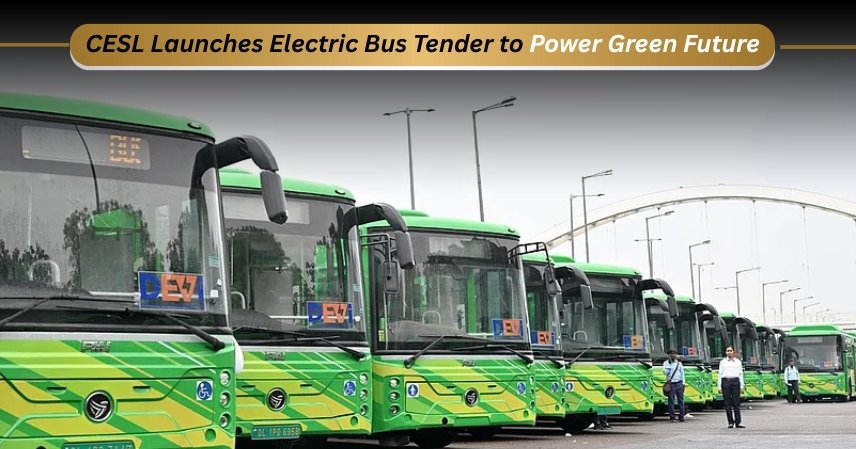
Convergence Energy Services Limited (CESL) is playing a pivotal role in fast-tracking India’s adoption of electric vehicles, especially in public transportation. With the National Electric Bus Program (NEBP), CESL has earmarked ₹10,900 crore for the deployment of electric buses, aiming to encourage a rapid shift to clean, non-polluting public transport.
Expanding Electric Buses Across India
This initiative will introduce a significant number of electric buses (E-buses) to key cities and states, aiming to transform public behavior and transportation habits. CESL’s proposal is not just about renewable energy, but also focuses on durability, pollution reduction, and lowering transit costs.
Why the CESL Project Matters
CESL: Driving India’s Green Mobility
CESL, a government-backed entity under Energy Efficiency Services Limited (EESL), promotes sustainable mobility by supporting electric vehicles, renewable energy, and efficient public transport systems.
Broad Public Interest
CESL has garnered significant attention for its efforts in the Grand Challenge bids for electric buses and charging networks. The new ₹10,900 crore NEBP tender aims to boost electric vehicle (EV) adoption across both metro and non-metro regions.
CESL’s 2025 Electric Bus Roadmap
Key Objectives
- Deploy 10,000 electric buses by 2025 for accessible, affordable, and eco-friendly public transport.
- Provide funding to state transport undertakings (STUs) and private bus companies for transitioning from diesel/CNG to electric vehicles.
- Develop essential charging and battery swapping infrastructure.
Main Features of the CESL Offer
- Total Investment: ₹10,900 crore
- Program Name: National Electric Bus Program (NEBP)
- Deployment Target: At least 10,000 electric buses
- Contract Models: Gross Cost Contracts (GCC) and Operating Lease Models
- Support: Infrastructure for charging, battery swapping, depots, and operational funding
Goals of the CESL Electric Bus Tender
- Support India’s Net Zero 2070 Target: Reduce carbon emissions from transportation.
- Promote Electric Mobility: Enhance bus fleets for inter- and intra-city travel.
- Lower Operational Costs: Electric buses have reduced fuel and maintenance expenses.
- Boost Local Manufacturing: Support the ‘Make in India’ initiative by funding domestic battery and bus production.
- Strengthen Regional Transport: Facilitate STUs’ transition to electric fleets, especially in smaller towns.
Transforming India’s Public Transportation
- Widespread Coverage:CESL’s NEBP extends beyond major cities to include tier-2 and tier-3 cities, allowing millions of Indians cleaner travel options.
- Robust Charging Infrastructure:The program aims to establish efficient systems for fast charging and battery swapping at depots and ports, ensuring minimal downtime.
- Public-Private Partnerships:CESL is encouraging private enterprises, EV startups, and OEMs to participate via long-term leases and operational contracts, creating a sustainable business ecosystem.
- Employment and Skill Development:The initiative will generate jobs and provide training for those involved in building, maintaining, and operating EV infrastructure.
- Environmental Impact:CESL estimates the project could reduce CO₂ emissions by 4 million tons annually, leading to significantly cleaner city air.
Key Stakeholders
Ministry of Power and Ministry of Heavy Industries: Set and enforce guidelines.
CESL: Manages bids, execution, and funding.
State Transport Undertakings (STUs): Operate and deploy buses.
OEMs: Manufacture and design buses (e.g., Tata Motors, Ashok Leyland, Olectra Greentech, PMI Electro).
Investors and Private Firms: Develop, lease, and operate infrastructure.
Importance of the CESL Electric Bus Tender
- Promotes Domestic Manufacturing: Supports Atmanirbhar Bharat.
- Accelerates Fleet Modernization: Enables faster retirement of old diesel buses.
- Improves Public Health: Reduces pollution-related respiratory issues.
- Strengthens Energy Security: Reduces reliance on imported fossil fuels.
- Drives Innovation: Increased funding for fleet management and EV technology.
Expert Opinions and Global Impact
Industry leaders and experts, like Dr. Mahesh Babu (CEO, Switch Mobility India), highlight how CESL’s program not only electrifies public transport, but also spurs technological advancements and attracts global investment into India’s EV sector.
Challenges Ahead
Despite progress, several hurdles remain:
- Expansion of Charging Infrastructure: Frequent grid and station upgrades are needed.
- Battery Recycling: Sustainable solutions for used EV batteries are essential.
- High Upfront Costs: Initial investment remains a challenge for some STUs, even with loans.
- Skilled Workforce: Ongoing training for EV drivers and mechanics is necessary.
CESL plans to address these by working closely with banks and government agencies.
The Road Ahead
India’s commitment to eco-friendly transport is clear, and CESL’s electric bus tender is a major stride forward. Greener fleets will lead to cleaner air, more jobs, economic growth, and energy security.
Conclusion
CESL’s electric bus auction is a landmark in India’s renewable energy journey. By promoting clean, efficient public transport, CESL is helping India become cleaner, smarter, and greener. With NEBP and robust government support, India is poised to lead the world in electric mobility by decade’s end.
FAQs
CESL is investing ₹10,900 crore to deploy over 10,000 electric buses across India.
OEMs, private businesses, and government-run transport corporations can participate using the GCC or operating lease model.
Improved public transit, reduced pollution, and lower operational costs.
Buses between 9 and 12 meters, suitable for intra- and inter-city travel, with options for air conditioning.
Deployment is expected to start in early 2026, following contract finalization and bidding.