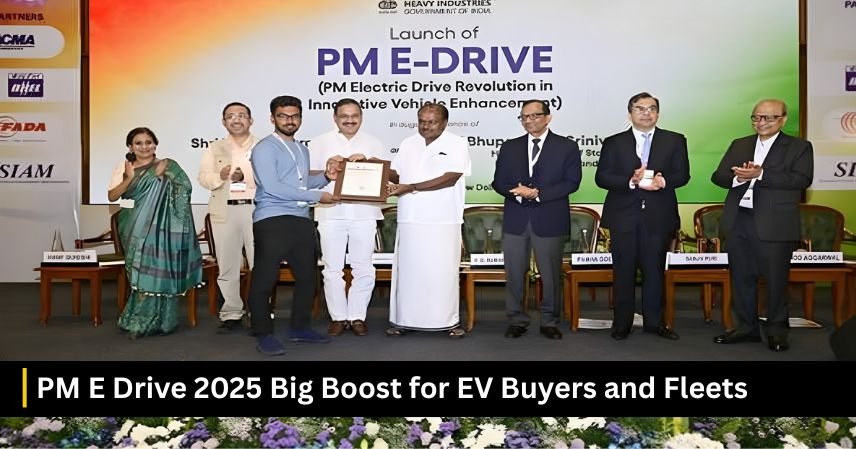
India’s electric mobility landscape is entering a new era with the launch of PM E-Drive 2025. This ambitious federal program aims to accelerate the adoption of electric two-wheelers, three-wheelers, commercial EVs, and public transport electrification. With rising fuel prices, stricter emission standards, and a growing demand for sustainable mobility, PM E-Drive 2025 offers financial incentives, robust charging infrastructure, and comprehensive support for both individual and fleet EV adoption.
What is PM E-Drive 2025?
PM E-Drive 2025 is a nationwide campaign initiated by the central government to replace and enhance previous EV incentive schemes such as FAME II. The program’s core objectives are to:
- Increase the adoption of electric vehicles across India
- Reduce vehicular pollution
- Make EVs more affordable and accessible
- Improve charging infrastructure
- Encourage domestic manufacturing of EVs and components
- Decrease reliance on imported fuels
This inclusive scheme provides support for both businesses and private consumers, making it one of India’s most comprehensive EV initiatives to date.
Key Objectives of the Scheme
The main goals of PM E-Drive 2025 include:
- Boosting EV Adoption: Wider access to EVs for individuals and businesses, especially in passenger, cargo, taxi, and public transport segments.
- Strengthening Local Manufacturing: Promoting the use of Indian-made batteries, components, and advanced EV technologies.
- Expanding Charging Infrastructure: Setting up thousands of new charging stations in urban, rural, and highway locations.
- Ensuring Battery Safety: Enforcing rigorous quality and safety standards for batteries and thermal management systems.
Eligibility: Who Can Benefit from PM E-Drive 2025?
The scheme is open to a wide range of users, including:
- Two-Wheelers: Scooters, bikes, and delivery e-scooters
- Three-Wheelers: Passenger vehicles, freight loaders, electric rickshaws
- Commercial Vehicles: Fleets, LCVs, mini trucks, work vehicles
- Public Transport: City and inter-city e-buses
Eligibility Criteria:
- Registered businesses in India or Indian citizens
- Purchase from approved OEMs with valid GST invoices
- Application through official government portals
Subsidy Structure and Incentives
PM E-Drive 2025 offers tailored financial incentives based on vehicle type and user category:
- Two-Wheelers: Per kWh subsidy, making EVs more affordable for individuals and delivery operators.
- Three-Wheelers: Incentives reduce upfront costs and monthly EMIs, encouraging a switch from diesel and CNG vehicles.
- Cargo 3Ws & Small EV Trucks: Specific support for logistics and last-mile delivery businesses.
- E-Buses: Substantial grants to state transport undertakings, supporting clean public transport.
- Manufacturing Incentives: Grants for battery plants, motor/controller assembly, and R&D.
Impact on EV Adoption
PM E-Drive 2025 is poised to accelerate EV uptake across all key segments:
- Two-Wheelers: Lower costs, better financing, more widespread adoption among students, commuters, and gig workers.
- Three-Wheelers: Higher driver earnings due to reduced expenses, faster fleet replacement cycles.
- Fleets: Logistics providers can electrify fleets quickly, benefiting from cost savings and operational efficiency.
Expansion of Charging Infrastructure
A major highlight of PM E-Drive 2025 is the extensive rollout of charging infrastructure, including:
- Public fast chargers
- Community charging hubs
- Highway charging corridors
- Workplace fleet charging points
- Battery swapping stations
This expansion reduces range anxiety, increases fleet uptime, and supports EV adoption beyond major cities.
Battery Safety, Standards, and Quality Control
Battery safety is at the core of the scheme, with requirements such as:
- Compliance with AIS 156 Phase 3 standards
- Mandatory safety assessments for battery management systems (BMS)
- Thermal management protocols
- Shockproof and waterproof battery designs
- Fire-resistant cases
These measures enhance user safety and build trust in EV technology.
Benefits for Fleets, Logistics, and Last-Mile Operators
- Lower Operating Costs: EVs have 70–80% lower per-kilometer expenses than petrol or diesel vehicles.
- Higher Earnings: Lower EMIs and running costs lead to increased daily income for drivers.
- Reduced Maintenance: Fewer moving parts mean less breakdown and downtime.
- Insulation from Fuel Price Volatility: Fleets are less affected by fluctuating petrol and diesel prices.
- Wider Adoption: Major companies like Amazon, Flipkart, BigBasket, Zomato, Swiggy, and logistics firms are rapidly electrifying their fleets.
Expert Insights
Industry experts view PM E-Drive 2025 as a game-changer for India’s EV sector:
- Significant boost for fleet electrification
- Noticeable drop in EV prices
- Expanded charging networks enabling fleet growth
- India poised to become a global EV manufacturing hub
The scheme aligns well with India’s clean mobility targets for 2030.
Final Thoughts
PM E-Drive 2025 is more than just another EV subsidy—it’s a comprehensive ecosystem strategy designed to transform mobility across India. From affordable pricing and expanded charging infrastructure to local manufacturing, battery safety, and fleet-focused incentives, the program offers substantial advantages for EV buyers, drivers, operators, and public transportation networks. For businesses and commercial mobility providers, PM E-Drive 2025 presents an unparalleled opportunity to shift to sustainable, profitable EV fleets.
FAQs
A central government initiative providing subsidies and support for EV buyers, fleets, and manufacturers.
Individuals (two- and three-wheeler buyers), drivers, delivery riders, logistics firms, and state transport undertakings.
Yes, cargo three-wheelers, LCVs, and fleet vehicles all receive significant support.
Yes, it includes large-scale expansion of fast-charging and battery swapping networks.
Implementation is ongoing and will continue through 2025, with state-level backing.