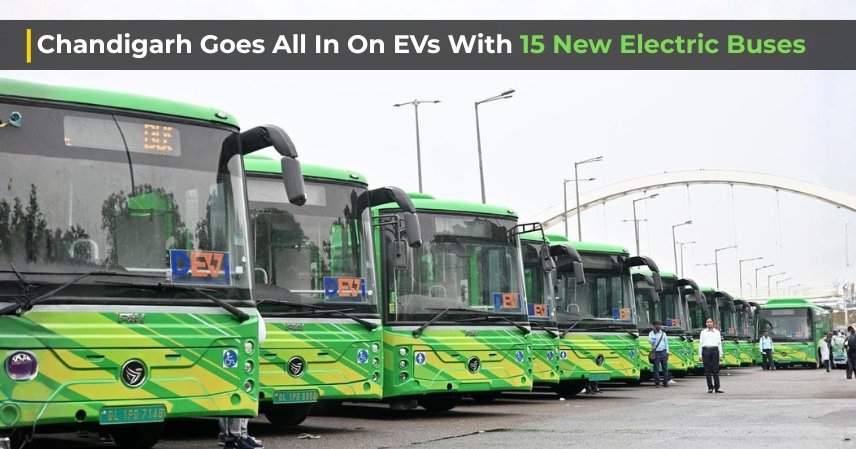
Chandigarh has taken a significant stride toward becoming one of India’s cleanest and most environmentally friendly cities by adding 15 new electric buses to its public transportation fleet. This move reinforces the Union Territory’s commitment to zero-emission travel, improved air quality, and a modern transit system.
The PM e-Bus Sewa Scheme: Powering the Change
These new buses are a part of the PM e-Bus Sewa Scheme, a major initiative by the Indian government to electrify public transit in cities nationwide. Chandigarh, an early adopter of this technology, stands out as a leader in India’s electric vehicle (EV) revolution.
Why Electric Buses Matter for Professionals and Citizens
While 15 buses may seem like a small addition, they signal a substantial transformation. With one of the highest vehicle-to-person ratios in India, Chandigarh urgently needs clean and efficient public transport.
Key Objectives of the Electric Vehicle Push
- Reduce urban pollution and carbon emissions
- Lower operational and fuel costs for public transport
- Provide quieter, smoother, and more comfortable rides
- Encourage citizens to use public transport instead of private cars
Electric buses are essential in realizing these goals due to their zero emissions and minimal noise compared to traditional diesel buses.
The PM e-Bus Sewa Scheme: Features and Benefits
The scheme focuses on cities with populations below 20 lakh and includes:
- Government subsidies for electric bus purchases
- Public-private partnerships for operations
- Emphasis on affordable and sustainable urban mobility
- Support for charging infrastructure development
Chandigarh’s active participation aligns perfectly with India’s broader environmental and electric vehicle policies.
Chandigarh’s Ongoing Efforts and Vision
Building on its reputation as a well-planned city, Chandigarh has already:
- Introduced electric buses in earlier phases
- Established EV charging stations at strategic locations
- Provided incentives for electric car and bike owners
The latest addition of 15 electric buses enhances Chandigarh’s model status for sustainable urban transport.
Phasing Out Diesel: A Clear Green Signal
A vital part of Chandigarh’s EV strategy is gradually retiring older diesel buses, which are major contributors to:
- Particulate pollution
- Nitrogen oxide emissions
- Noise pollution
Electric buses, by contrast, are cleaner and cheaper to maintain over their lifespan.
Passenger Benefits: A Better Commute Experience
Modern electric buses offer advanced technology and improved comfort. Passengers can enjoy:
- Smooth acceleration
- Reduced noise and vibration
- Enhanced in-cabin comfort
- Improved air quality
These upgrades make public transit more attractive and can boost ridership.
Charging Infrastructure and Smart Operations
To support its electric fleet, Chandigarh is expanding its charging infrastructure at:
- Bus stops
- Key terminals
- High-traffic corridors
Smart scheduling allows for efficient charging during off-peak hours, minimizing downtime and keeping buses operational.
Economic and Environmental Advantages
Although electric buses have a higher upfront cost, their total cost of ownership is much lower due to:
- Reduced energy expenses compared to diesel
- Fewer maintenance needs
- Extended vehicle lifespan
- Lower dependence on fossil fuels
Environmentally, this shift advances Chandigarh’s climate action and sustainability goals.
Ambitious Targets for 2027
Chandigarh aims to achieve one of the highest rates of zero-emission vehicle adoption in India by 2027, emphasizing:
- Electric two-wheelers
- Electric cars
- Electric three-wheelers
- Expansion of charging networks
Electrifying public transit creates a multiplier effect, reducing emissions more effectively than focusing solely on private vehicles.
Impact on Traffic and Urban Mobility
The ultimate goal: cleaner, smarter, and more accessible city transport. Electric buses are expected to:
- Encourage a shift from private cars to buses
- Reduce traffic congestion
- Lower fuel imports
- Promote equitable urban transit
Chandigarh’s approach could serve as a blueprint for other mid-sized cities aiming to adopt electric mobility.
Challenges and the Road Ahead
Despite progress, challenges remain:
- Expanding the charging network
- Training drivers and mechanics
- Battery recycling and management
Ongoing government support and increased public awareness will help overcome these obstacles.
Conclusion
With 15 new electric buses, Chandigarh is making remarkable progress toward cleaner, greener transportation. While the number may seem small, it reflects a strong policy direction and long-term vision. As diesel buses are phased out, Chandigarh is emerging as a national leader in eco-friendly public transport—paving the way for a cleaner, quieter, and more sustainable future.
FAQs
Chandigarh has introduced 15 new electric buses under the PM e-Bus Sewa Scheme.
The PM e-Bus Sewa Scheme, funded by the Indian government.
Yes, Chandigarh plans to gradually replace its diesel buses with electric ones.
They reduce costs, noise, and air pollution.
To achieve one of the highest rates of zero-emission vehicle use in India by 2027.