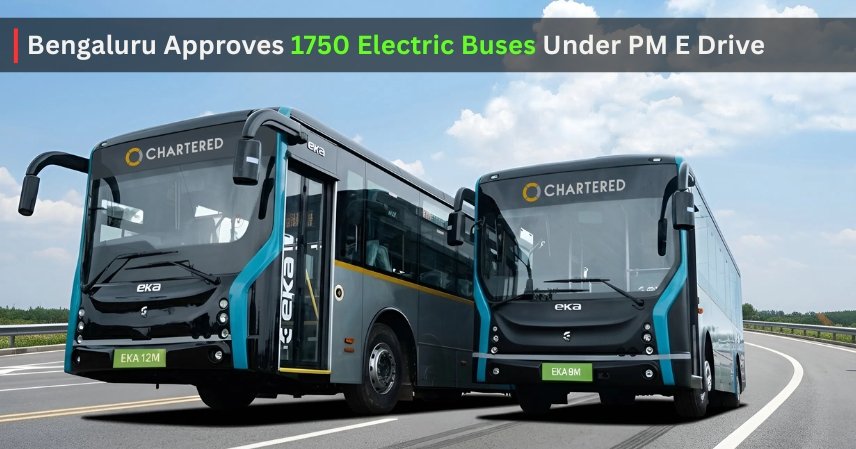
Bengaluru has taken a significant step towards clean and sustainable mobility by deploying 1,750 electric buses as part of the Government of India’s PM E-Drive Scheme. Announced for rollout in 2025, this is one of the city’s largest single expansions of electric public transit, further strengthening the Bengaluru Metropolitan Transport Corporation (BMTC) electric bus network.
What is the PM E-Drive Scheme?
The PM E-Drive Scheme is an initiative by the Indian federal government aimed at accelerating the adoption of electric vehicles in urban areas. Its objectives include:
- Promoting electric public transport
- Improving urban air quality
- Reducing dependence on fossil fuels
- Supporting local manufacturing of electric vehicles
Bengaluru’s allocation of electric buses is determined by population, public transport demand, and air quality needs. The approval of 1,750 electric buses signals the city’s readiness to significantly grow its electric transit system.
The Scale of Bengaluru’s Electric Bus Investment
Under the PM E-Drive scheme, Bengaluru is set to receive a total of about 4,500 electric buses. With 1,750 buses approved in this phase, the city has already achieved nearly 39% of its target. This approval represents one of the largest electric bus projects ever awarded to a private consortium in India, reflecting growing confidence in large-scale electric vehicle operations.
Strengthening BMTC’s Electric Bus Network
BMTC has consistently expanded its electric bus fleet to meet increasing commuter needs and reduce pollution. The addition of 1,750 buses will:
- Expand routes across Bengaluru
- Increase service frequency on busy corridors
- Lower air and noise pollution
- Provide a smoother, more comfortable ride
Electric buses are especially suited for urban traffic, offering lower operating costs and enhanced passenger experience compared to traditional diesel buses.
EKA Mobility: Driving Innovation in Electric Vehicles
EKA Mobility brings advanced expertise in developing high-performance electric vehicles to the initiative. The company is recognized for:
- Designing and manufacturing electric vehicles in India
- Developing robust electric bus platforms
- Prioritizing safety, environmental standards, and battery longevity
Through the PM E-Drive Scheme, EKA Mobility supports India’s goals of self-reliance and a stronger electric vehicle ecosystem.
Chartered Speed Limited: Operational Backbone of the Project
Chartered Speed Limited will handle the daily operations of the electric buses. With experience managing over 2,000 buses and serving more than 350,000 passengers daily across six states, the company is responsible for:
- Fleet management and scheduling
- Driver training and monitoring
- Maximizing vehicle uptime and maintenance
- Ensuring passenger safety and service quality
This partnership is key to the large-scale, efficient deployment of electric buses in Bengaluru.
Enhanced Safety and Smart Technology
Chartered Speed Limited has implemented several innovations to ensure smooth operations, including:
- Predictive maintenance protocols
- Battery health monitoring systems
- Specialized EV driver training programs
- Real-time fleet tracking with GPS
- CCTV for enhanced passenger security
These measures help optimize system performance, ensure safety, and build public confidence in electric transit.
Supporting Bengaluru’s Clean Mobility Vision
The introduction of electric buses aligns with:
- Karnataka’s clean transportation roadmap
- India’s commitment to carbon emission reduction
- The goal of cleaner air in cities
Electric buses play a crucial role in reducing greenhouse gas emissions, especially in densely populated, high-traffic urban centers like Bengaluru.
Industry Perspectives
EKA Mobility’s Commitment
Rohit Srivastava, Business Head and Chief Growth Officer at EKA Mobility, emphasized the project’s alignment with India’s ambition to boost electric vehicle adoption and transform urban mobility.
Chartered Speed’s Growth Plan
Sanyam Gandhi, Whole-Time Director at Chartered Speed Limited, shared plans to electrify around 25% of their fleet by FY 2027, with continued investment in EV infrastructure for sustainable growth.
Proven Track Record
Through the PM e-Bus Sewa Scheme, Chartered Speed has already deployed over 1,000 electric buses, reinforcing their capability to manage large-scale electric fleets and contributing to their success with the Bengaluru project.
Environmental and Economic Benefits
Deploying 1,750 electric buses is expected to yield numerous benefits:
Environmental:
- Zero tailpipe emissions
- Reduced carbon footprint
- Cleaner urban air
- Less congestion and noise
Economic:
- Lower fuel and maintenance costs
- Job creation in EV operations and maintenance
- Expansion of charging infrastructure
- Long-term savings for public transport
Why Electric Buses Matter for Indian Cities
Electric buses are emerging as the preferred solution for urban transport in India because they offer:
- Predictable operating costs
- Greater passenger comfort
- Improved energy efficiency
- Compatibility with renewable energy sources
Bengaluru’s large-scale adoption of electric buses sets an example for other Indian cities aiming to modernize transit while supporting environmental sustainability.
Conclusion
The PM E-Drive Scheme’s approval of 1,750 electric buses marks a transformative step for Bengaluru’s public transport. With strong industry partnerships, operational expertise, and government support, the city is rapidly moving toward a cleaner, quieter, and more sustainable future. Bengaluru’s leadership serves as an inspiring model for other Indian cities seeking to expand while prioritizing environmental stewardship—making electric buses the backbone of urban mobility.
FAQs
The PM E-Drive Scheme has approved 1,750 electric buses for Bengaluru.
EKA Mobility will supply the buses, and Chartered Speed Limited will operate and maintain them.
The deployment covers approximately 39% of Bengaluru’s total electric bus allotment.
The buses will operate under the BMTC network.
It strengthens Bengaluru’s public transit, accelerates clean mobility, and reduces pollution.