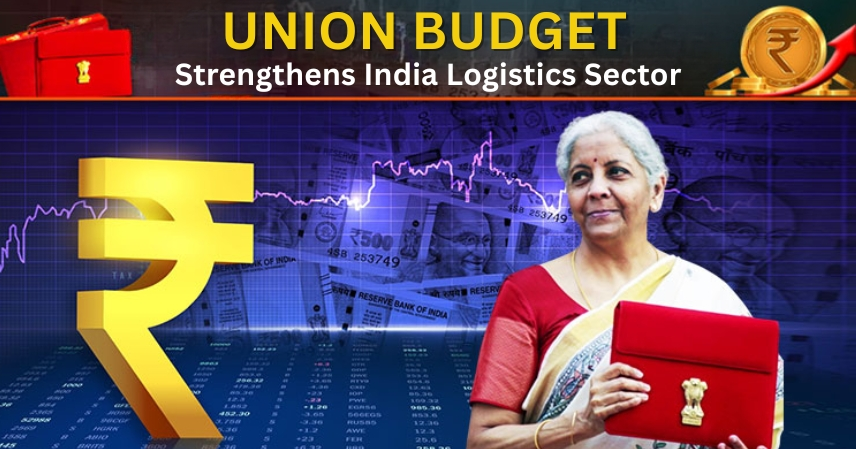
On February 1, 2026, Union Finance Minister Nirmala Sitharaman presented the Union Budget for the ninth consecutive year—a historic achievement signaling policy stability and economic resilience. More than just a fiscal document, Budget 2026 lays out a strategic roadmap to modernize India’s logistics, enhance infrastructure, and accelerate the transition to sustainable transportation.
Logistics as the Foundation of Viksit Bharat
Logistics is now central to India’s long-term growth and the vision of Viksit Bharat. The government is prioritizing zero-emission transportation, multimodal connectivity, freight corridors, waterways, and industrial development. These initiatives promise increased demand, improved connectivity, and a future with greener, more efficient transport networks for the commercial vehicle industry, fleet operators, and logistics firms.
Key Highlights of the Union Budget 2026
- Dankuni to Surat Freight Corridor: A dedicated corridor to streamline cargo movement.
- Coastal & Waterway Shipping Target: Aim to increase the share of shipping on waterways and coastlines to 12% by 2047.
- Coastal Cargo Promotion Scheme: Initiatives to promote movement of goods via coastal routes.
- Electric Bus Deployment: Introduction of thousands of electric buses across the country.
- Revitalizing Industrial Clusters: Leveraging technology to rejuvenate 200 industrial clusters.
- Infrastructure Investment: Increased spending to spur economic growth.
- Tier 2 & 3 Cities as Logistics Hubs: Focusing on smaller cities for logistics expansion.
All these initiatives aim to reduce logistics costs, speed up transit, and create a more competitive supply chain.
Sustainable Cargo Movement Takes Center Stage
A core theme of Budget 2026 is environmentally friendly freight movement. The government’s plan for new freight corridors connecting eastern and western India will make cargo routes faster and more efficient.
Benefits of Dedicated Freight Corridors:
- Less congestion on passenger rail lines
- Greater reliability for freight
- Reduced fuel consumption
- Lower logistics costs
- Enhanced competitiveness for manufacturing
These improvements are expected to transform transportation economics for businesses dependent on timely deliveries.
Expanding Waterways: A Shift in Transport Strategy
Traditionally reliant on road transport, India’s latest budget aims to balance the logistics mix by promoting inland waterways and coastal shipping.
Major Announcements:
- 20 New Waterways: Launching over the next five years, starting with National Waterway Five in Odisha, connecting key ports and industrial hubs.
- Coastal Cargo Promotion Scheme: Encouraging businesses to shift freight from roads and rails to waterways, aiming to double waterborne freight share by 2047.
Advantages of Water Transport:
- Lower carbon emissions
- Reduced transportation costs
- Higher cargo capacity
- Improved fuel efficiency
Digital Cargo Clearance: Streamlining Business Processes
To ease cargo movement, the budget proposes a single digital window for approvals across all government agencies, set to launch by April 26, 2026. This integrated platform will handle clearances for food, drugs, plant materials, and wildlife-related shipments.
Expected Benefits:
- Less paperwork
- Shorter delays
- Greater transparency
- Improved regulatory compliance
Streamlined clearances will cut costs and boost efficiency for logistics companies.
Major Boost for Electric Mobility
Clean transportation remains a core agenda, with the government planning large-scale deployment of electric buses. This initiative demonstrates a strong commitment to reducing pollution and urban congestion.
Benefits of Electrifying Public Transport:
- Cleaner city air
- Lower operational costs
- Reduced noise pollution
- Improved passenger experience
Electrified public transport is becoming essential for India’s rapidly growing cities.
Infrastructure Spending Fuels Economic Growth
Sustained public investment in infrastructure continues, with the government aiming to further increase capital expenditure. This will drive demand in construction, logistics, and commercial vehicles.
Impact of Stronger Infrastructure:
- Higher freight movement
- Faster cargo transit
- Increased truck usage
- Greater demand for heavy vehicles
Experts predict robust growth in the commercial vehicle market as a result.
Focus on Tier 2 & Tier 3 Cities
A significant portion of the budget targets the transformation of smaller cities into economic engines. Mapping City Economic Regions and investing in regional development will enhance manufacturing, logistics, and connectivity.
Implications for Transporters:
- New shipping routes
- Increased cargo volumes
- Growing demand for vehicles
Geographical diversification is set to reshape India’s logistics landscape.
Reviving Industrial Clusters with Technology
Another strategic goal is to modernize 200 industrial clusters with advanced technologies, boosting productivity and efficiency.
Stronger Clusters Will Result In:
- Shorter supply chains
- Greater manufacturing capacity
- Enhanced export opportunities
The government is also supporting domestic production of containers and infrastructure equipment.
University Townships Along Logistics Corridors
The budget supports the creation of university townships near major industrial corridors, featuring research centers, skill institutes, and residential complexes.
Objective: To develop a skilled workforce for the next generation of manufacturing and transportation. Industry-academia collaboration will build robust talent pipelines for automotive and logistics sectors.
Rare Earth Corridors: Securing EV Supply Chains
Developing rare earth mineral corridors is a strategic move to reduce import dependence for electric vehicle components.
Importance of Secure Supply Chains:
- Domestic production of electric motors and advanced batteries
- Enhanced global competitiveness for high-tech manufacturing
This initiative strengthens India’s position in global mobility markets
Industry Reactions: A Growth-Oriented Budget
Industry leaders in automotive and mobility sectors have praised the budget as forward-thinking and growth-oriented.
- Ongoing infrastructure investment is expected to sustain demand for trucks, buses, and logistics assets.
- Support for battery ecosystems and local processing demonstrates strong policy commitment to clean transportation.
- Improved multimodal connectivity will help reduce logistics costs and promote regional growth.
Overall, the consensus is that Budget 2026 balances short-term industry confidence with long-term capacity building.
Making India Globally Competitive Through Logistics
Improving logistics efficiency remains a top priority. Planned investments aim to:
- Reduce transit times
- Strengthen supply chains
- Boost export competitiveness
- Attract long-term investments
Efficient transportation networks are key to India’s ongoing integration with global markets.
Supporting Self-Reliance in Manufacturing
The budget encourages local manufacturing in areas like semiconductors, electronics, energy transition technologies, and advanced equipment. These steps, along with infrastructure growth, have a multiplier effect on industrial activity.
Why Budget 2026 Matters for the Commercial Vehicle Industry
The impact on trucking and logistics is substantial:
- Increased freight demand
- Expansion of logistics corridors
- Higher fleet utilization
- Growth in electric commercial vehicles
- Improved supply chains
Budget 2026 lays the foundation for long-term, sustainable growth in the sector.
Conclusion
Union Budget 2026 provides a clear and forward-looking plan to modernize India’s logistics and transportation landscape. By focusing on multimodal transport, infrastructure expansion, electric mobility, and domestic manufacturing, the government is laying a strong foundation for a globally competitive economy.
For the commercial vehicle sector, the message is clear: demand will rise, connectivity will improve, and sustainability will drive the future of transportation. Logistics is now at the heart of India’s Viksit Bharat vision—not just as a support function, but as a driving force for national growth.
FAQs
February 1, 2026.
To increase the use of waterways and coastal shipping while reducing road dependence.
By making transportation faster, less congested, and more cost-effective.
Yes, through large-scale deployment of electric buses and support for a domestic battery ecosystem.
Their development drives industrial activity and opens new logistics opportunities.