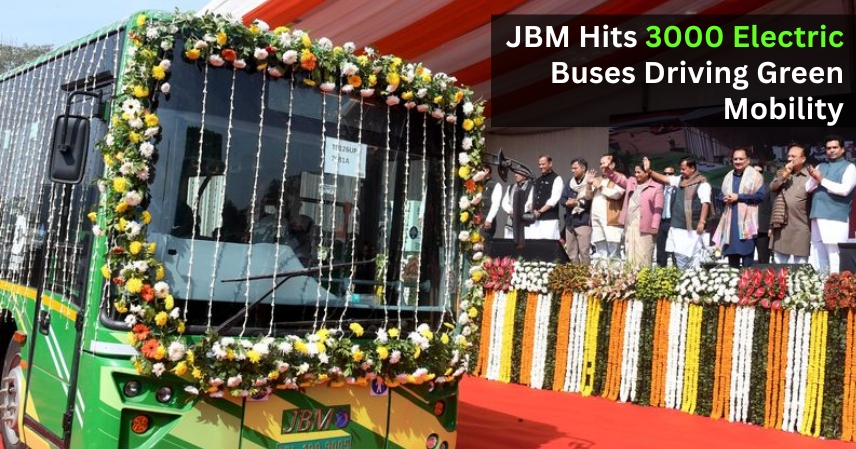
With over 3,000 electric buses deployed nationwide, JBM Ecolife Pvt. Ltd. is driving India’s shift to sustainable public transportation. This achievement not only raises JBM’s profile in the electric mobility sector but also supports the government’s mission to reduce emissions by adopting cleaner transit options.
Recent Developments: Expanding the Electric Fleet
Key Deployments in Delhi and Gujarat
- Delhi: 103 new electric buses recently inaugurated
- Gandhinagar: Agreement for 100 new electric buses under the PM e-Bus Sewa project
- Gujarat: Targeting a fleet of 500 electric buses
- National Impact: Over 3,000 electric buses, 300 million kilometers traveled, and more than a billion passengers served
These milestones highlight JBM’s leadership in India’s rapidly growing electric bus market.
Delhi's Green Leap: 103 New Electric Buses
Delhi’s Chief Minister, Rekha Gupta, recently flagged off 103 air-conditioned, low-floor electric buses, further strengthening Delhi’s fleet, which now exceeds 1,000 electric buses. These vehicles help reduce pollution and improve urban mobility by making public transport cleaner and more comfortable.
Benefits for Delhi
- Improved air quality
- Reduced reliance on diesel buses
- Enhanced passenger experience
- Better last-mile connectivity
Gandhinagar Agreement: Supporting PM e-Bus Sewa
As part of the PM e-Bus Sewa project, JBM Ecolife has committed to supplying 100 electric buses to Gandhinagar. The phased deployment will see 40 buses introduced by the end of FY 2025-26 and aims for a total of around 500 buses in Gujarat’s fleet.
Advanced Features for Urban Transport
- Full air conditioning
- CCTV surveillance
- Automatic doors
- Senior citizen-friendly design
- Facilities for differently-abled passengers
- Ergonomic seating
Dedicated depots and charging stations are also being established to ensure reliability and minimal downtime.
Strong Operational Track Record Nationwide
JBM’s electric buses have proven their reliability and popularity, as reflected by:
- 300+ million kilometers covered
- Over 1 billion passengers served
- More than 1 billion kg of CO₂ emissions reduced
These outcomes demonstrate substantial environmental and economic benefits, including lower operational costs and reduced noise pollution.
Manufacturing Excellence: Powering Growth and Exports
JBM’s advanced manufacturing facility can produce up to 20,000 electric buses annually, making it one of the world’s largest outside China. This capacity positions JBM to meet both domestic and future international demand.
Integrated Mobility Solutions: The JBM Advantage
As part of JBM Auto Ltd., JBM Ecolife leverages decades of automotive engineering experience. Their holistic approach—spanning manufacturing, infrastructure, and operations—strengthens trust with city governments and transport authorities.
Core Strengths
- Extensive automotive engineering expertise
- Proven large-scale deployments
- Collaborative government relationships
- Long-term vision for sustainable urban mobility
Why Electric Buses Are Gaining Momentum
India’s move towards electric buses is fueled by several key factors:
- Rising fuel costs
- Stricter pollution regulations
- Government incentives
- Urban population growth
- Need for quieter, cleaner transport
- Long-term cost reductions
These factors position electric buses as the future of sustainable urban transit.
Benefits for the Environment and Citizens
- Lower greenhouse gas emissions
- Cleaner city air
- Reduced carbon footprint
- More energy-efficient transportation
Large-scale electrification is crucial for cities committed to climate change goals.
Expert Perspective
Industry experts note that with over 3,000 electric buses in operation, India has moved from pilot projects to mainstream adoption. JBM’s consistent deployments demonstrate technical expertise, business reliability, and robust infrastructure planning.
Challenges and Opportunities for the Future
Despite rapid progress, some challenges remain:
- Expanding charging infrastructure
- Managing grid capacity
- Training drivers and staff
- Optimizing routes
- High upfront investment costs
Future Prospects
- Smarter fleet management
- Improved battery technology
- Faster charging solutions
- Enhanced public-private collaboration
- Integrated urban mobility platforms
The market for electric buses in India is expected to grow significantly in the coming decade.
Everyday Impact: Better Transit Experiences
For daily commuters, electric buses mean:
- Smoother, quieter rides
- Enhanced safety features
- Greater accessibility
- Higher overall comfort
These improvements are reshaping public expectations of urban transport.
The Road Ahead for JBM Electric Mobility
The milestone of 3,000 buses signals JBM’s strong readiness and long-term commitment to sustainable transport. With robust manufacturing, ongoing deployments, and government support, JBM is set to remain a leader in India’s electric mobility revolution.
Conclusion
JBM Ecolife’s expanding electric bus fleet is a major stride towards India’s cleaner, more efficient transportation future. Initiatives like the PM e-Bus Sewa scheme and continued investments in technology ensure that JBM will keep setting benchmarks in green mobility as India moves towards a more sustainable urban infrastructure.
FAQs
JBM has over 3,000 electric buses currently in service.
Rekha Gupta, the Chief Minister of Delhi, inaugurated the 103 new buses.
JBM will supply 100 electric buses to Gandhinagar under the PM e-Bus Sewa scheme.
More than a billion passengers have used JBM buses.
JBM can produce up to 20,000 electric buses annually.
They provide cleaner, quieter, and more fuel-efficient public transport, reducing pollution and improving urban living.