
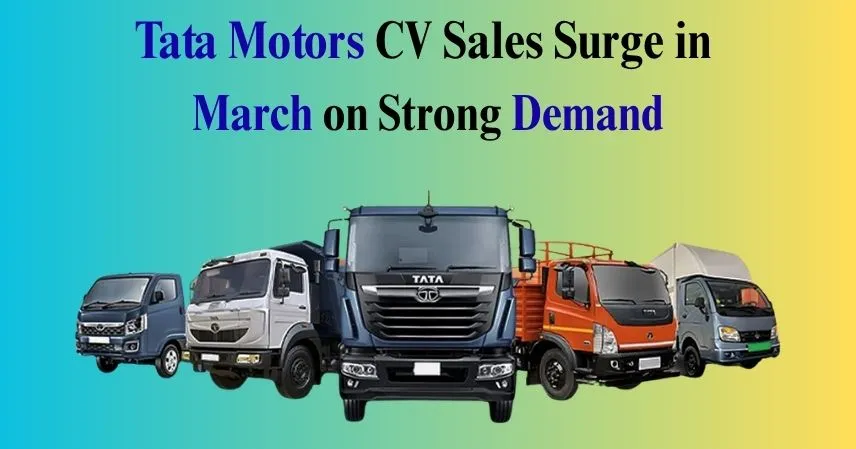
In March 2026, Tata Motors experienced significant sales, including doing very well in the fourth quarter of FY26. Sales of commercial vehicles grew considerably substantial in both domestic and international markets. The company sold 132,465 units in Q4 FY26, which is 25% more than the same time last year.
The performance was helped by an increase in freight demand, a return to normal infrastructure activity, and more businesses using electric commercial vehicles. Tata Motors also saw substantial growth in March 2026, which shows that the commercial vehicle sector is still going strong.
The strong quarterly results indicate that the industry is getting better and that Tata Motors’ product line of trucks, buses, and small commercial vehicles is getting better.
Tata Motors’ Performance in the Commercial Vehicle Market in the Fourth Quarter of FY26
Tata Motors had strong sales of commercial vehicles in Q4 FY26 across several segments. The company said it sold 132,465 units, up from 105,643 units in Q4 FY25.
Main Points
- Sales in Q4 FY26 were 132,465 units.
- 25% growth every year
- High demand at home and abroad
- Better freight activity
- Infrastructure demand is coming back.
- Support for expanding a portfolio
This growth is due to higher demand in the logistics, construction, and e-commerce sectors.
Sales Performance in March 2026
Tata Motors did very well in March 2026.
- Sales in March 2026 were 47,976 units.
- Sales in March 2025 were 41,122 units.
- A 17% increase each year
The steady growth in March shows that customers are becoming more confident and demand is stable across all segments
The MHICV Segment is Moving Forward Quickly.
The medium- and heavy-intermediate commercial vehicle segment was still a big part of Tata Motors’ growth.
Domestic MHICV Performance
- In March 2026, there were 23,805 sales of MHICV in the US.
- In March 2025, there were 20,474 domestic MHICV sales.
- A 16% increase
For the fourth quarter of FY26:
- In Q4 FY26, there were 64,904 domestic MHICV sales.
- In the fourth quarter of FY25, there were 51,551 domestic MHICV sales.
- 26 percent more growth
This growth shows that demand is going up in infrastructure, mining, and long-haul logistics.
Total MHICV, Exports Included
Tata Motors had sales in both domestic and international markets:
- 24,703 units in March 2026
- 16% increase
- 68,007 units in Q4 FY26
- 26% more growth
This means that demand for exports is growing along with the recovery at home.
The EV Segment is Growing Quickly
Tata Motors also saw a lot of growth in electric commercial vehicles.
- In FY26, the number of EVs sold grew by 59% compared to the previous year.
- More and more people are using electric CVs.
- Expanding the electric portfolio
- Increasing the number of electric vehicles in the fleet
- The government is pushing for more people to use electric vehicles.
- Fleet managers are starting to use electric trucks and buses more.
Commentary on Leadership
Girish Wagh, the Managing Director and CEO of Tata Motors Commercial Vehicles, said that the first half of FY26 was not excellent. But the company did very well in the second half.
The recovery was caused by:
- Better demand conditions
- Effect of GST 2.0 rollout
- Strong momentum in Q3
- More growth in Q4
- More demand for replacing fleets
He pointed out that sales of commercial vehicles in Q4 FY26 reached 125,562 units, the highest level since Q4 FY21. This shows that freight movement and customer confidence are getting better.
Performance for the Full Year FY26
Tata Motors saw strong growth in all of its segments in FY26.
- 428,329 units sold in FY26
- Sales for FY25 were 376,903 units.
- A 14% increase
The growth was supported by demand in the following areas:
- Trucks and buses
- Small business cars
- Electric vehicles for business
- People who run fleets
- The infrastructure sector
This broad-based growth made Tata Motors’ position in the market stronger.
Strengthening the Product Portfolio in FY26
In FY26, Tata Motors added to its line of commercial vehicles by launching new models and upgrading existing ones.
Important Changes to Products
- Ace Pro’s launch
- Introducing Winger 9S
- The truck range has been brought up to European safety standards.
- The start of the Azura range
- More electric vehicles to choose from
These changes helped Tata Motors get more customers and reach more markets.
Recovery of Infrastructure and Freight Demand
The demand for commercial vehicles went up because of:
- Execution of infrastructure projects
- Things happening in the construction industry
- Growth in mining operations
- Logistics demand recovery
- E-commerce growth
These things helped the MHICV segment grow.
The Effects of GST 2.0 and the Market’s Recovery
The rollout of GST 2.0 made freight more efficient and fleets more useful.
Some of the benefits were the following:
- Moving goods faster
- Better use of logistics
- More use of the fleet
- More demand for transportation
- Better performance of the supply chain
These factors helped demand come back in the second half of FY26.
Problems and Market Headwinds
Tata Motors pointed out some problems even though it did well.
Some of the most important problems are the following:
- Changes in the price of diesel
- Tensions between countries in West Asia
- Uncertainties in the supply chain
- Changes in freight rates
- Changes in market demand
These things had an effect on the slowing of growth in March.
Areas to Focus on for Future Growth
To continue growing, Tata Motors is focusing on a few key areas.
Plan for the Future
- Keeping an eye on changes in diesel prices
- Handling geopolitical risks
- Making sure production keeps going
- Increasing digital mobility options
- Making the dealer network stronger
- Expanding the EV portfolio
These plans will help the company grow over time.
Growth of Digital Mobility Solutions
Tata Motors is adding more digital services for fleet operators.
These are:
- Systems for managing fleets
- Telematics answers
- Maintenance that predicts
- Tracking vehicles
- Watching how well drivers do
Digitalization makes fleets work better and longer.
Plan for Electric Commercial Vehicles
Tata Motors is still working on its plan to make more electric commercial vehicles.
Important areas of focus:
- Buses that run on electricity
- Trucks that run on electricity
- Electric vehicles for last-mile delivery
- Support for the charging ecosystem
- Electrification of fleets
This plan is in line with India’s goals for sustainability.
FY27 Market Outlook
The future of the commercial vehicle industry looks promising. 9S. In March 2026, Tata Motors experienced significant sales, including the launch of the Tata Motors Ace Pro and the Tata Motors Winger 9S.
Things that make growth happen:
- Investing in infrastructure
- Need for construction
- Cycle for replacing fleets
- Growth of e-commerce
- Taking on EVs
- Support from government policy
Tata Motors is in a good position to take advantage of these chances.
Conclusion
In the fourth quarter of FY26, Tata Motors did very well, with sales of commercial vehicles up 25% from the previous year. The growth was due to higher demand for freight, more work on infrastructure, and strong performance in the Medium and Heavy Commercial Vehicles (MHICV) segment.
The company also saw strong growth in EVs, which shows that the commercial vehicle industry is becoming more electrified. Tata Motors is ready for the future because it has a new product line, digital solutions, and a strategic focus on areas where it can grow, such as electric vehicles and sustainable transportation solutions. The company’s strategy is uncertain, especially regarding its focus on increasing sales and expanding market share to meet evolving consumer demands.
Tata Motors is still strengthening its position in the market and taking advantage of new opportunities in the commercial vehicle sector, even though the world is uncertain.
FAQs
Q1.What were Tata Motors’ sales of commercial vehicles in Q4 FY26?
Ans.In the fourth quarter of FY26, Tata Motors sold 132,465 commercial vehicles.
Q2.What were Tata Motors’ sales in March 2026?
Ans.Sales in March 2026 were 47,976 units.
Q3.How much did sales of MHICV go up?
Ans.In the fourth quarter of FY26, MHICV sales went up by 26%.
Q4.How much did Tata Motors’ EV sales go up?
Ans.In FY26, Tata Motors saw a 59% increase in EV sales.
Q5.What were Tata Motors’ total sales in FY26?
Ans.Sales in FY26 were 428,329 units.
Q6.What new products came out in FY26?
Ans.The Ace Pro Winger 9S and Azura ranges were released.
Q7.What made Tata Motors grow?
Ans.The growth was driven by the need for infrastructure, the recovery of freight, and the adoption of electric vehicles, which has been essential for meeting increasing market demands and sustainability goals. substantial
Q8.What will Tata Motors focus on in the future?
Ans.The company is focused on digital solutions for EV growth and keeping production going.