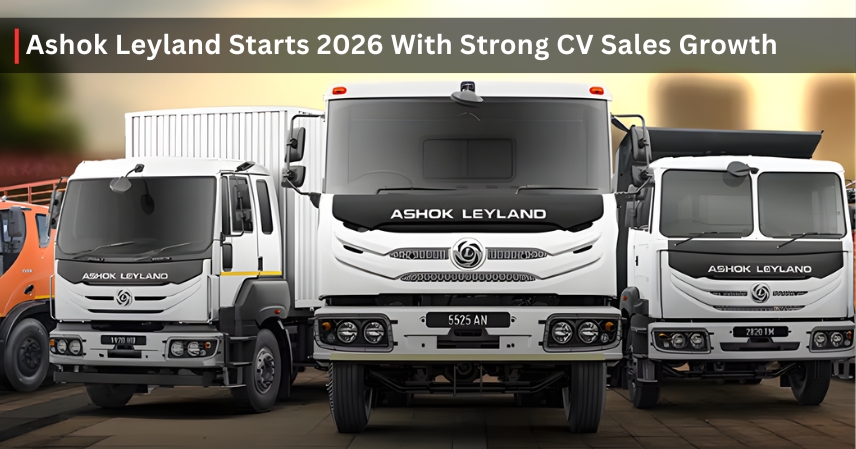
Ashok Leyland, a leading name in India’s commercial vehicle industry and the flagship of the Hinduja Group, kicked off 2026 with impressive sales. In January alone, the company sold 19,500 commercial vehicles—a robust 38% increase compared to the same month last year. This surge set a positive tone for the year ahead.
Key Drivers Behind the Growth
Booming Domestic Market
The primary driver of Ashok Leyland’s growth was the domestic market, where the company sold 18,605 commercial vehicles. Rising economic activity, increased construction, and greater freight movement contributed to this upswing. Fleet owners are renewing their vehicles to boost efficiency, safety, and fuel economy.
Strong Demand in M&HCV Segment
The Medium and Heavy Commercial Vehicle (M&HCV) segment performed particularly well, with sales climbing to 11,359 units. Infrastructure investments and aging fleets led to higher demand for heavy-duty trucks, which are essential for long-haul transport, mining, and large-scale logistics.
Expanding LCV Segment
The Light Commercial Vehicle (LCV) division also saw strong growth, selling 7,246 units. The rise of last-mile delivery, urban logistics, and small business transportation drove demand. LCVs are increasingly popular for their affordability, versatility, and ease of use in congested city environments.
Export Success Adds to Momentum
Ashok Leyland’s performance extended beyond India, with export sales reaching 895 units. Despite global economic challenges, the company maintained steady demand overseas. M&HCV exports saw a slight increase, while LCV exports grew significantly, especially in developing markets seeking economical transportation solutions.
Market Confidence and Positive Trends
The overall sales figures reflect rising confidence within the market. M&HCVs led in volume, indicating robust freight movement, while the expanding LCV segment points to improved urban logistics. This balanced growth highlights a resilient market and increasing optimism among fleet operators.
Factors Fueling Ashok Leyland’s Growth
Infrastructure Investments
Government spending on highways, industrial corridors, and large-scale projects has created greater demand for commercial vehicles.
Freight and E-commerce Expansion
A recovering economy and a surge in online shopping have boosted freight needs, especially for last-mile delivery, driving LCV sales higher.
Fleet Modernization
Companies are replacing outdated vehicles with safer, more fuel-efficient models, reducing maintenance costs and improving operational efficiency.
Technological Advancements
Ashok Leyland focuses on advanced technology, better mileage, driver safety, comfort, and lowering total ownership costs. These priorities have helped build strong trust among fleet operators and logistics providers.
Sustainability and Future-Readiness
With ongoing investments in sustainable mobility and alternative fuel technologies, Ashok Leyland is poised to meet future transportation needs.
What This Means for India’s Commercial Vehicle Sector
Indicators of Economic Health
Rising commercial vehicle sales often signal higher industrial output and infrastructure development, underlining a strengthening economy.
Transformation in Logistics
Digitalization, regulatory changes, and enhanced connectivity are rapidly evolving India’s logistics sector, encouraging fleet expansion and investment.
Positive Outlook Ahead
Industry experts predict sustained demand for commercial vehicles, driven by infrastructure development, increased production, rural consumption, and logistics network expansion. While factors like interest rates and fuel prices may influence short-term buying patterns, the long-term outlook remains optimistic.
Conclusion
Ashok Leyland’s remarkable performance at the start of 2026, fueled by strong domestic demand and growing exports, highlights the robust health of India’s transportation and logistics sector. With both heavy and light commercial vehicle segments thriving, the company is well-positioned to capitalize on future opportunities and continue leading the market.
FAQs
The company sold 19,500 commercial vehicles, marking a significant year-over-year increase.
Key factors include strong domestic demand, infrastructure improvements, fleet modernization, and healthy exports.
The M&HCV segment experienced the fastest growth, spurred by construction and freight activity.
Yes, exports continued to improve, with LCV exports showing remarkable acceleration.
Strong sales point to a growing economy, expanding logistics networks, and increased confidence among fleet operators.