
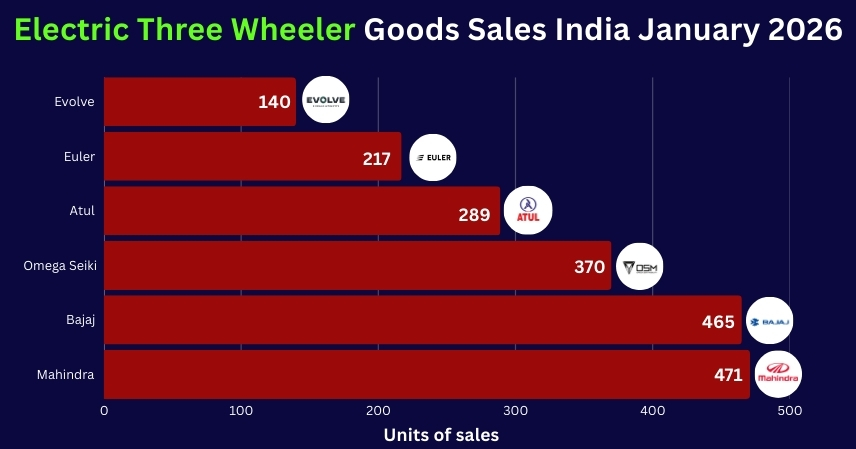
The adoption of electric transportation in India is gaining momentum, with the electric three-wheeler (E-3W) goods L5 segment emerging as a leader. January 2026 OEM registration data reveals steady demand, intensifying competition, and increased popularity of electric freight vehicles for urban and semi-urban logistics.
Market Highlights: Key Players and Trends
- Mahindra Last Mile Mobility led E-3W goods sales in January 2026.
- Bajaj Auto posted monthly gains but saw a slight year-on-year dip.
- Omega Seiki experienced rapid monthly growth, gaining traction in the market.
- Atul Auto and Green Evolve demonstrated robust month-on-month performance.
- The L5 electric three-wheeler goods segment remained stable and competitive.
Sales Performance: January 2026 in Focus
A comparison of January 2026 sales with December 2025 (MoM) and January 2025 (YoY) provides valuable insights:
Mahindra Last Mile Mobility Maintains Leadership
- Sales: 471 units sold in January 2026
- YoY Growth: 3.5% increase
- MoM Decline: 13.1% decrease, likely due to a post-year-end purchase lull
Why Mahindra Succeeds:
- Proven vehicle reliability
- Strong service and dealer network
- High trust among fleet operators
- Early mover advantage in electric last-mile transport
Bajaj Auto Shows Signs of Recovery
- Sales: 465 units (second highest)
- YoY Decline: 3.3% decrease
- MoM Growth: 3.3% increase
Bajaj’s figures indicate a rebound in demand, driven by logistics companies seeking cost-effective and efficient electric alternatives to ICE vehicles.
Omega Seiki Gains Market Speed
- Sales: 370 units
- YoY Growth: 0.5%
- MoM Growth: 16.7%
Omega Seiki’s rapid growth is attributed to competitive pricing, practical freight capabilities, and broader dealership reach.
Atul Auto’s Impressive Monthly Rise
- Sales: 289 units
- MoM Growth: 22.5%
Atul Auto’s surge, especially in smaller cities, points to renewed buyer interest and improved distribution networks.
Euler Motors Faces Short-Term Challenges
- Sales: 217 units
- YoY Decline: 20.5%
- MoM Decline: 13.5%
Although facing short-term setbacks, experts believe product upgrades and partnerships could help Euler Motors recover.
Green Evolve’s Consistent Growth
- Sales: 140 units
- MoM Growth: 12%
Green Evolve’s steady rise shows growing acceptance among small businesses exploring electric cargo solutions.
Market Overview: Stability Amid Competition
As of January 2026, the electric three-wheeler goods segment balances established leaders and ambitious newcomers. Fleet electrification is accelerating, and the demand for electric cargo vehicles remains strong.
Key Takeaways:
- Market leaders retain a strong business base.
- Mid-level manufacturers are accelerating growth.
- Electrification of fleets is progressing quickly.
- Despite fluctuations, overall demand is robust.
Why Are Electric Cargo Three-Wheelers in Demand?
- Booming Last-Mile Delivery
E-commerce, hyperlocal logistics, and fast-commerce trends have increased the need for efficient cargo vehicles. Electric three-wheelers offer:
- Lower operating costs
- Reduced maintenance
- Zero tailpipe emissions
- Easy maneuverability in congested cities
- Supportive Government Policies
Subsidies, state incentives, and investments in charging infrastructure are propelling market growth, while policies targeting emissions reductions encourage faster fleet electrification.
- Rising Fuel Prices Drive Electric Adoption
With volatile fuel prices, fleet owners prefer vehicles offering predictable, lower running costs—making electric cargo vehicles attractive for their total cost of ownership.
- Expanding Charging Infrastructure
A growing charging network is reducing range anxiety and making electric logistics more practical, further lowering adoption barriers.
Future Outlook: What January 2026 Signals
Recent sales trends affirm that electric cargo mobility is evolving from trial phase to necessity.
Trends to Watch:
- Accelerated fleet electrification
- Intensified OEM rivalry
- Greater product innovation
- More flexible fleet financing options
Industry experts expect continued strong activity and fleet upgrades throughout 2026.
Economic Impact: The E-3W Goods Segment’s Role
Electric cargo vehicles are becoming central to India’s digital and logistics economy by:
- Supporting small businesses
- Streamlining deliveries
- Reducing logistics costs
- Building sustainable transportation systems
Healthy sales numbers often indicate broader business growth and economic health.
Expert Opinion and Manufacturer Focus
January’s results reinforce confidence in India’s electric mobility ambitions. Despite short-term fluctuations for some OEMs, the long-term growth trend remains upward.
Manufacturers’ Priorities:
- Vehicle reliability
- Battery performance
- After-sales service
- Strategic fleet partnerships
These factors are expected to drive the next phase of growth.
Conclusion
January 2026 sales of electric three-wheeled L5 vehicles reflect a stable yet dynamic market. Mahindra Last Mile Mobility leads the way, Bajaj Auto is rebounding, and Omega Seiki is gaining momentum. The rise of mid-sized players signals increased competition, fostering innovation and greater choice for buyers.
With expanding infrastructure, favorable policies, and a sustained surge in last-mile delivery needs, the market for electric cargo three-wheelers is set to grow further. As India advances toward cleaner transportation, this segment will remain vital for the country’s logistics future.
FAQs
Mahindra Last Mile Mobility registered the most units, maintaining its industry lead.
Omega Seiki and Atul Auto both experienced significant month-over-month growth, indicating rising demand.
Yes, driven by e-commerce growth, government incentives, and fleet electrification
They are cost-effective, environmentally friendly, and efficient for logistics.
Experts expect strong growth, supported by infrastructure development and increasing last-mile delivery needs.