India is experiencing a rapid transformation in its automotive landscape as electric vehicles (EVs) gain traction. The number of EVs—including two- and three-wheelers, passenger cars, and commercial fleets—continues to rise on Indian roads. This growth is driven by increasing environmental awareness, rising fuel prices, and favorable government initiatives.
However, challenges remain. Chief among them is the lack of robust EV infrastructure, which continues to hinder widespread consumer adoption.
Addressing the Infrastructure Gap
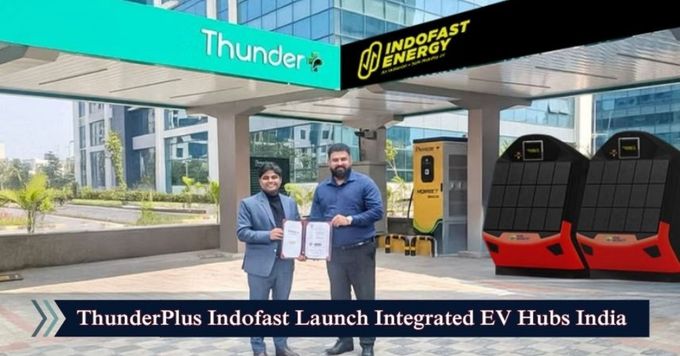
To overcome these barriers, ThunderPlus and Indofast Energy have joined forces to establish integrated EV hubs across India. This partnership marks a significant milestone for the country’s EV ecosystem. These hubs will feature both DC fast-charging stations and battery swapping facilities, catering to various vehicle categories.
By offering these comprehensive services, the partnership aims to create a highly connected, efficient, and future-ready EV infrastructure network.
Why EV Infrastructure Matters in India
India stands among the world’s fastest-growing EV markets, especially for:
- Two-wheeled electric vehicles
- Three-wheeled electric vehicles
- Urban passenger EVs
- Commercial delivery fleets
As adoption accelerates, infrastructure must keep pace to address concerns about range, charging availability, and network reliability.
The Shift Toward Integrated Energy Centers
Traditional models—like standalone charging stations or battery swap points—are making way for centralized energy hubs. These integrated centers can serve a diverse array of vehicles and provide flexibility for both individual and commercial users. The ThunderPlus–Indofast Energy partnership exemplifies this industry shift.
What the ThunderPlus–Indofast Energy Partnership Offers
The new integrated EV hubs will provide:
- DC fast-charging stations for rapid charging
- Battery swapping services for instant energy replenishment
- Compatibility with two-wheelers, three-wheelers, passenger EVs, and commercial fleets
- Convenient, all-in-one energy access points
This flexibility enables users to choose between fast charging and battery swapping, depending on their immediate needs. Commercial fleets, in particular, benefit by minimizing downtime through quick battery swaps.
Understanding Connected EV Hubs
Key Features of Integrated EV Hubs
- Dual Power Options: Users can opt for either charging or battery swapping.
- Multi-Vehicle Compatibility: Supports two- and three-wheelers, passenger EVs, and commercial fleets.
- Urban-Centric Design: Maximizes land use efficiency and consolidates infrastructure.
- Scalable & Adaptable: Designed to evolve alongside increasing EV demand and technological advancements.
These hubs streamline land use, reduce redundant infrastructure, and help alleviate urban congestion.
Boosting Fleet Efficiency
For commercial EV fleets, time efficiency is crucial. Battery swapping enables rapid turnaround, reducing vehicle downtime and boosting operational productivity. This is especially beneficial for ride-sharing, delivery, and logistics fleets, allowing for more trips and improved resource utilization.
Supporting Diverse Vehicle Segments
The integrated EV hubs are designed to accommodate:
- Electric Two-Wheelers: Widely used for personal travel and deliveries.
- Electric Three-Wheelers: Essential for urban transport of goods and passengers.
- Passenger EVs: Increasing adoption in metropolitan and Tier 2 cities.
- Commercial EV Fleets: Used extensively in logistics, e-commerce, and manufacturing.
By serving a broad spectrum of vehicles, these hubs strengthen the entire Indian EV ecosystem.
Building a Scalable and Interoperable EV Ecosystem
The alliance between ThunderPlus and Indofast Energy is centered on creating scalable, interoperable, and smart infrastructure:
- Expandable Hubs: Infrastructure can grow based on demand.
- Multi-Brand Compatibility: Services are accessible to vehicles from different manufacturers.
- Centralized Energy Management: Enhances grid efficiency and reliability.
This approach supports the growing urban and suburban EV market in India.
From Products to Ecosystems: The New Paradigm in Indian EV Industry
The focus in India’s EV sector is shifting from manufacturing vehicles to building comprehensive ecosystems—including charging, swapping, and energy management networks. The ThunderPlus–Indofast Energy partnership is a prime example of this holistic approach. Integrated hubs build consumer trust, improve infrastructure reliability, and accelerate adoption.
Benefits for EV Users and Business Fleet Operators
For Individual EV Owners
- Reduced charging anxiety
- Faster, more reliable charging
- Single-point access to multiple services
- Enhanced convenience and peace of mind
For Fleet Operators
- Flexible, rapid energy solutions
- Increased operational uptime
- Faster deliveries and improved productivity
- Reliable, scalable operations
As e-commerce and urban logistics expand, such infrastructure becomes essential for maintaining competitive fleet performance.
Advancing India’s Clean Mobility Goals
Integrated EV hubs contribute to:
- Lower carbon emissions
- Reduced reliance on fossil fuels
- Increased use of renewable energy
- Higher EV adoption rates
By making EV infrastructure more accessible and efficient, the partnership supports India’s long-term clean mobility ambitions.
Market Impact and Industry Leadership
In a competitive landscape, providers offering integrated, multi-segment EV infrastructure are poised for leadership. The ThunderPlus–Indofast Energy alliance strengthens both companies’ positions as ecosystem enablers and scalable energy solution providers. Their collaboration reduces network fragmentation and enhances national cohesion.
The Future: Smart, Adaptive Infrastructure
As EV adoption spreads to Tier 2 and Tier 3 cities, future-ready infrastructure will need to be:
- Cost-effective
- Space-efficient
- Multi-purpose
- Adaptable to emerging technologies
Integrated hubs are well-suited to evolve into smart transportation centers, incorporating renewable energy, energy storage, digital fleet management, and real-time analytics.
Conclusion
The strategic partnership between ThunderPlus and Indofast Energy marks a major leap forward in building India’s EV infrastructure. By introducing integrated hubs that combine DC fast charging and battery swapping, they offer flexibility, efficiency, and scalability for a wide range of vehicles.
This ecosystem-driven approach not only benefits individual users and fleet operators but also accelerates India’s transition to cleaner, more sustainable transportation. Integrated EV hubs are set to become a cornerstone of India’s future mobility landscape, enabling rapid and sustainable urban growth.
FAQs
It aims to develop integrated EV hubs across India, offering both battery swapping and DC fast charging.
The hubs support electric two-wheelers, three-wheelers, passenger EVs, and commercial vehicle fleets.
Users enjoy flexibility, reduced downtime, and smoother operations.
Quick battery swaps minimize downtime, enhancing efficiency and profitability for fleet operators.
They optimize land usage, improve infrastructure efficiency, and accelerate EV adoption.
Yes, the partnership aims to build a network reaching cities and towns across India.