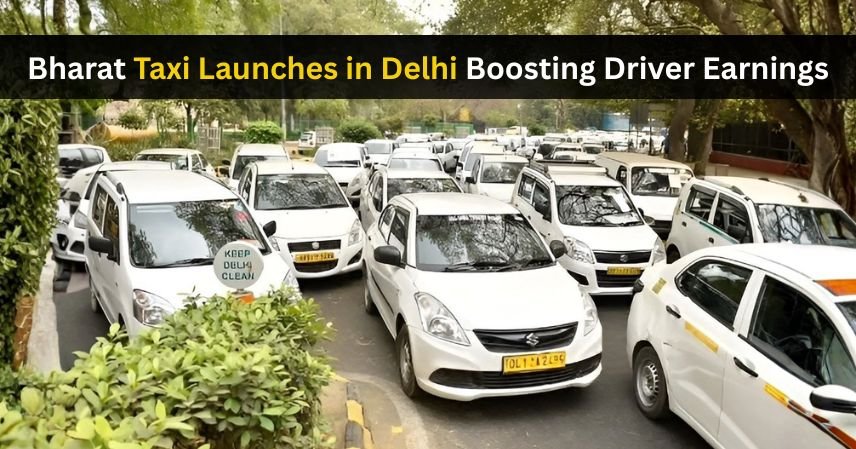
The ride-hailing market in India is on the cusp of a major transformation. On January 1, 2026, the government-backed Bharat Taxi app will officially launch in Delhi, offering a driver-first, cooperative alternative to existing ride-hailing platforms.
What Sets Bharat Taxi Apart?
Unlike traditional platforms that charge high commissions and impose unpredictable surge pricing, Bharat Taxi operates on a transparent, sustainable model. Here, drivers are treated as stakeholders, not gig workers. With over 56,000 drivers already registered before launch, Bharat Taxi enters the market with strong momentum.
Why Bharat Taxi Matters
Bharat Taxi is more than just another taxi app. As a government-supported initiative, it collaborates with various partners to solve long-standing issues faced by both drivers and passengers.
Key Objectives
- Stabilize Driver Income: Offer predictable, fair earnings.
- Eliminate Unpredictable Surge Pricing: No hidden or sudden price hikes.
- Transparent Fare Structure: Fares are clear and upfront.
- Enhance Passenger Safety and Trust: Secure, reliable rides.
- Promote Inclusive Digital Mobility: Accessible for everyone, aligning with India’s vision for self-reliant, fair digital markets.
The Driver-First Model: A Disruptive Approach
One of Bharat Taxi’s most innovative features is its profit-sharing model.
How Drivers Benefit
- Keep 80% or More of Fares: Much higher than most private platforms.
- Low Platform Commission: Drivers retain more of their earnings.
- Cooperative Membership: Drivers are valued members, not disposable contractors.
- Stable Income: Earnings are not dependent on surge pricing.
This model directly addresses income instability—a major challenge for gig workers on existing apps.
Transparent and Fair Pricing for Passengers
Bharat Taxi is committed to convenience and trust for passengers.
Passenger-Friendly Features
- No Extra Charges During Peak Times
- Advance Fare Visibility: Know your fare before you book.
- Multi-Modal Options: Book cars, bikes, and taxis through one app.
- Multilingual Interface: Supports Indian languages.
- Real-Time Tracking and Driver Verification
- 24/7 Customer Support
By removing surprise charges and providing full fare transparency, Bharat Taxi aims to restore public trust in app-based transportation.
Early Adoption Signals Market Readiness
With 56,000+ drivers signed up before launch, Bharat Taxi’s early success highlights:
- Growing dissatisfaction with high-commission platforms.
- Demand for fairer digital work models.
- Confidence in a government-backed mobility solution.
Such scale at launch positions Bharat Taxi as a strong competitor from day one.
Impact on Ola, Uber, and Rapido
For years, private aggregators have dominated ride-hailing in India. Bharat Taxi introduces competition at a systemic level—not just in pricing.
Competitive Shifts
- Lower Commissions: Challenges private platforms’ business models.
- No-Surge Policy: Undercuts reliance on surge revenue.
- Ecosystem Profits: Cooperative ownership keeps earnings local.
- Transparent Pricing: Builds user trust.
If Bharat Taxi’s model is adopted in other major cities, it could force industry-wide changes in commission structures and fare transparency.
Empowering India’s Gig Economy and Urban Workers
Millions of Indians depend on gig work, yet face financial instability. Bharat Taxi addresses this by:
- Fair income distribution
- Reducing reliance on incentives and bonuses
- Increasing worker participation
- Ensuring long-term sustainability
This aligns with global trends toward responsible platform management and worker welfare.
Accelerating Electric Vehicle Adoption
A significant long-term benefit of Bharat Taxi could be its support for electric vehicles (EVs).
Why the Model Favors EVs
- Transparent Costs: Makes EV fleet planning easier.
- Driver Incentives: Lower operational costs directly benefit drivers.
- Government Backing: Enables future EV incentives.
- Potential Partnerships: Opportunity for collaboration on charging infrastructure.
With the right policy support, Bharat Taxi could help drive the transition to electric mobility in Indian cities.
Environmental and Urban Benefits
A cooperative, potentially electric ride-hailing ecosystem offers numerous advantages:
- Reduced air and noise pollution
- Less congestion due to balanced supply
- Cleaner, more predictable urban mobility
Such changes are crucial for cities like Delhi, struggling with pollution and traffic issues.
Alignment with National Goals
Bharat Taxi supports India’s broader policy goals, including:
- Strengthening digital public infrastructure
- Promoting cooperative economic models
- Enabling sustainable urban transportation
- Reducing fuel imports
- Advancing climate commitments
This initiative is not just about transportation, but about policy-aligned innovation.
Challenges Ahead
While promising, Bharat Taxi must address several challenges:
- Competing with well-funded private firms
- Scaling up technology and service quality
- Managing peak-time demand without surge pricing
- Ensuring consistent driver and passenger experience
However, institutional backing and early adoption offer a strong foundation for overcoming these hurdles.
Future Expansion Beyond Delhi
If Bharat Taxi succeeds in Delhi, expansion is likely to:
- Other major cities
- Tier 1 and Tier 2 towns
- Institutional and government mobility contracts
Such growth could have a transformative impact on India’s ride-hailing landscape.
Expert Perspectives: Bharat Taxi’s Market Impact
Transport and mobility experts see Bharat Taxi as advancing:
- Structural fairness
- Long-term sustainability
- Competitive pricing discipline
- Scalable, public-interest mobility models
It also opens new opportunities for fleet operators, EV makers, and city planners.
Conclusion
The launch of Bharat Taxi in Delhi is more than just the debut of a new app—it’s a call to reimagine urban transportation as fair, transparent, and aligned with national priorities.
If successful, Bharat Taxi could:
- Redefine competition in ride-hailing
- Improve livelihoods for thousands of drivers
- Accelerate EV adoption
- Increase trust in digital mobility
This could mark the beginning of a more inclusive, sustainable, and people-centric transportation future for India’s cities.
FAQs
January 1, 2026.
It is government-backed and driver-run, with drivers as key stakeholders.
Drivers receive 80% or more of the fare—much higher than on most private platforms.
No, it does not allow surge pricing.
While not required at launch, the platform is well-positioned to support EV adoption through future partnerships and incentives.