
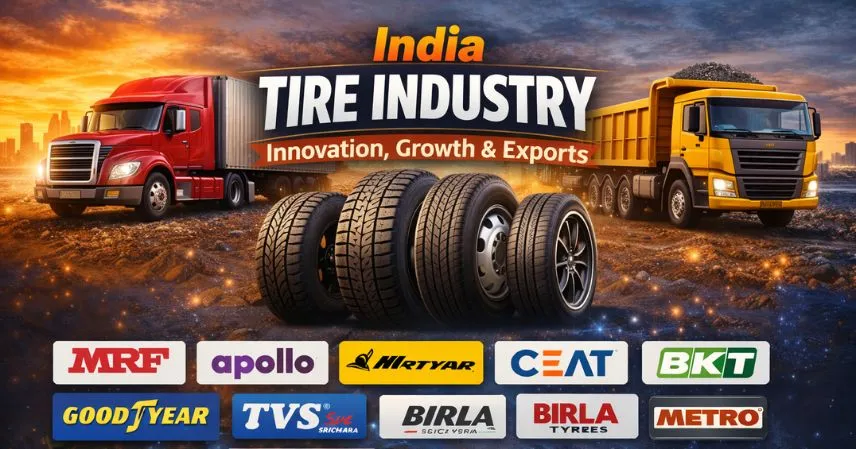
India’s tire sector is a cornerstone of the country’s rapidly growing automotive and mobility ecosystem. Tire manufacturers in India produce a wide variety of tires for passenger cars, commercial trucks, buses, two-wheelers, three-wheelers, and off-road vehicles. As car ownership increases, infrastructure expands, and logistics needs evolve, the tire industry has become more advanced and globally competitive.
Evolution of Tire Manufacturing
In the past, tire manufacturers mainly focused on durability and load-bearing capacity. Today, the focus has shifted toward eco-friendliness, adaptability to highways, compatibility with smart mobility, and fuel efficiency. With increased domestic production and rising exports, India is steadily emerging as a global hub for tire manufacturing.
Market Overview
Rising Vehicle Ownership
Increasing disposable incomes and urbanization are driving higher demand for passenger vehicles and two-wheelers across India.
Infrastructure and Logistics Expansion
Large-scale road construction projects and the growth of logistics networks are fueling demand for commercial vehicle tires.
Robust Replacement Market
With a growing number of vehicles on the road, the replacement tire segment has become a significant revenue stream.
Export Growth
Indian tire manufacturers now export to over 150 countries, enhancing their competitiveness on the global stage.
OEM and Replacement Demand
Consistent demand from both original equipment manufacturers (OEMs) and the replacement market is expected to sustain long-term sector growth.
Radicalization: Transforming the Truck and Bus Tire Segment
Shift to Radial Tires
One of the most significant structural changes in the Indian tire industry has been the shift from bias tires to radial tires, especially in trucks and buses. Radial tires offer:
- Greater fuel efficiency
- Improved load distribution and longevity
- Reduced heat generation
- Enhanced road control
Fleet owners are increasingly adopting radial tires due to their cost-effectiveness and durability, prompting manufacturers to invest heavily in advanced production technologies and R&D.
Trends Shaping the Indian Tire Industry
Adoption of Tubeless and All-Weather Tires
Safety, comfort, and reliability are priorities for Indian consumers, leading to trends such as:
- Increased use of tubeless tires
- Innovative all-weather tread designs
- Improved wet-grip performance
- Reduced road noise
- Enhanced puncture resistance
These features are especially important given India’s diverse road conditions.
Technological Innovations and Advancements
Advanced Rubber Compounds
Manufacturers are incorporating silica-based compounds to create high-performance tires with lower rolling resistance and improved fuel efficiency.
Smart Tire Technology
The use of sensors for performance and pressure monitoring is on the rise, particularly in premium and commercial segments.
Lightweight Construction
Lighter tires enhance performance, especially for electric vehicles.
AI-Driven Quality Control
Data analytics and automation ensure consistent manufacturing quality and efficiency.
Focus on Environmental Sustainability
Sustainability is transforming the Indian tire industry. Companies are investing in:
- Eco-friendly manufacturing processes
- Reduced carbon emissions
- Renewable energy sources
- Waste minimization strategies
- Responsible sourcing of raw materials
Low rolling resistance tires help reduce greenhouse gas emissions, supporting India’s climate goals.
The Importance of Retreading
Benefits for Fleets and the Environment
Retreading is particularly important for commercial vehicles, offering:
- Lower operating costs
- Extended tire lifespan
- Reduced rubber waste
- Environmental benefits
India is one of the world’s leading markets for tire retreading.
Impact of Electric Vehicles (EVs) on Tire Design
The rapid adoption of EVs is creating new engineering requirements for tires, such as:
- Higher torque resistance
- Lower rolling resistance
- Improved grip
- Reduced noise
- Enhanced load-bearing capacity
Tire manufacturers are innovating to meet the specific needs of EVs in both passenger and two-wheeler segments.
Leading Tire Companies in India
India is home to several prominent tire brands, including:
- Balkrishna Industries: Global leader in off-highway tires
- MRF: India’s largest tire company, strong in passenger, commercial, and motorsport markets
- JK Tyre & Industries: Pioneer of radial technology with strong OEM partnerships
- CEAT Limited: Major player in passenger and two-wheeler tires, expanding globally
- Apollo Tyres: Global brand with a significant presence in Europe
- Goodyear India Limited: Part of the world’s largest tire company
- TVS Srichakra Ltd.: Key supplier for two-wheelers and off-road vehicles
- Birla Tyres Limited: Diverse market presence, both domestic and global
- Metro Tyres Limited: Focused on two- and three-wheeler markets
- Kesoram Industries Limited: Producer of well-known tire brands
- Bridgestone India Private Limited: Successful subsidiary of the global Bridgestone brand
- Maxxis Rubber India Private Limited: Growing demand in vehicle and motorcycle segments
- Ralson India Limited: Known for bicycle and two-wheeler tires
- Modi Tyre Company, Ltd.: Regional presence with a rich history
- Yokohama India Private Limited: High-end tires for both regular and performance cars
India’s Export Competitiveness
Indian tire companies export to North America, Europe, Latin America, Africa, and Asia. Key advantages include:
- Cost-effective manufacturing
- Skilled workforce
- Robust raw material supply
- Supportive government policies
- Strategic port locations
Exports, especially in specialty and off-highway tires, continue to rise.
Challenges Facing the Industry
Despite rapid growth, the Indian tire sector faces several challenges:
- Volatile raw material prices, especially natural rubber
- Global trade uncertainties
- Intensifying competition
- Stringent regulatory compliance
However, strong domestic demand provides stability amid global fluctuations.
Conclusion
The Indian tire industry is evolving rapidly, driven by new technologies, the growth of electric vehicles, and changing consumer demands. Innovations span from radialization and smart tire technologies to sustainable manufacturing practices. Industry leaders like Balkrishna Industries, MRF, Apollo Tyres, CEAT, and JK Tyre are helping India shine on the global stage. As the automotive sector grows, the tire industry will remain integral to India’s infrastructure, logistics, mobility, and economic progress.
FAQs
Growing car ownership, infrastructure development, increasing replacement demand, and expanding exports.
It refers to the shift from bias to radial tires, which offer greater durability, fuel efficiency, and longevity.
EVs require tires with low rolling resistance, high torque resistance, and minimal noise, prompting new design innovations.
Retreading reduces operating costs, extends tire life, and benefits the environment, making it attractive for commercial fleets.
Yes, India exports tires to over 150 countries and is a growing global manufacturing hub.