India is pushing for cleaner, sustainable transportation in its commercial vehicle sector. However, financing challenges—such as high upfront costs and limited access to credit—continue to hinder the widespread adoption of electric buses and trucks.
MHI’s High-Level Meeting on EV Financing
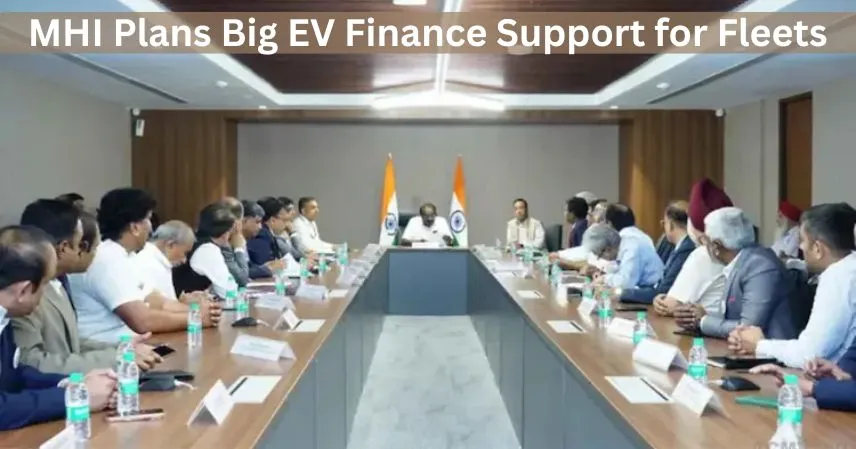
On May 20, 2026, the Ministry of Heavy Industries (MHI) held a high-level meeting in New Delhi to discuss how to improve financial support for electric commercial vehicles.
Key Focus Areas:
- Exploring loan guarantee schemes and interest subvention aid.
- Speeding up the adoption of electric buses and trucks.
- Supporting India’s decarbonization and net-zero emission goals.
Highlights of the MHI EV Finance Program
Main Discussion Points:
- Funding solutions for electric buses and commercial EVs.
- Participation from major government and private banks.
- Drafting EV Finance Guarantee Schemes.
- Considering interest subvention mechanisms.
- Easing the financial burden on fleet operators.
Objectives:
- Accelerate commercial EV adoption.
- Support sustainable transport and air quality improvement.
- Reduce dependence on oil imports.
The Importance of Electric Commercial Vehicles
Key Contributors to the Sector:
- Gas mileage
- CO2 emissions
- Air quality (especially in cities)
- Pollution reduction
Electric buses and trucks are crucial for:
- Reducing fossil fuel reliance
- Enhancing environmental sustainability
- Achieving net-zero emissions
Key Participants in the Meeting
Attendees:
- Senior government officials (Chaired by H. D. Kumaraswamy)
- Major banks: SBI, PNB, Canara Bank, HDFC Bank, Central Bank of India, SIDBI
- Private banks, transport unions, fleet owners, tour operators, and financial institutions
Credit Guarantee Scheme for Electric Commercial Vehicles
What Is a Credit Guarantee Scheme?
- Government-backed support that reduces risk for banks lending to EV buyers.
- Makes it easier for fleet operators to get loans.
Benefits:
- Easier loan approvals
- Lower investment risk
- Improved access for MSMEs
- Faster EV adoption
Interest Subvention Support
What Is Interest Subvention?
- Partial interest subsidy provided by the government.
- Lowers the cost of loans for EV buyers.
Advantages:
- Lower EMIs
- Reduced purchase costs
- Higher profitability for operators
- Makes EVs more attractive compared to diesel vehicles
Barriers to Private Sector EV Adoption
Major Challenges:
- High upfront cost of electric buses and trucks
- Reluctance of banks to finance commercial EVs
- Limited charging infrastructure
- Battery life and replacement concerns
- Knowledge gaps in operating and maintaining EVs
Advantages of Electric Buses
- Lower operating costs
- Less noise pollution
- No exhaust emissions
- Improved urban mobility
- Reduced fuel expenses
Result: Electric buses are increasingly popular in Indian cities focused on air quality and fuel savings.
The Growing Demand for Electric Trucks
Drivers of EV Truck Uptake:
- Rising diesel prices
- Corporate sustainability goals
- Government subsidies
- Urban low-emission policies
- E-commerce growth
The Impact of Financial Assistance
Expected Outcomes:
- Boost in electric bus and truck sales
- Faster fleet modernization
- Improved air quality
- Lower logistics costs
- Expansion of domestic EV manufacturing
Public-Private Partnerships: A Collaborative Approach
Key Collaborators:
- Government agencies
- Banks and financial organizations
- Fleet managers and transport unions
- Commercial vehicle manufacturers
Goal: Develop real-world financing models for commercial EV adoption.
Commercial EV Market Outlook in India
Growth Factors:
- Government incentives
- Oil price increases
- Urban pollution controls
- Online retail growth
- Expanding logistics sector
Forecast: Lower financing costs and better infrastructure will drive significant market growth
Future Directions for Green Mobility
- Expansion of EV charging infrastructure
- Advances in affordable battery technology
- Increased government support
- Adoption of intelligent fleet management
- Growth in green logistics and electric freight
Conclusion
The Ministry of Heavy Industries is spearheading efforts to make electric commercial vehicles more accessible by proposing credit guarantee schemes and interest subvention. This move is expected to:
- Accelerate EV adoption
- Support decarbonization and net-zero targets
- Expand India’s commercial EV ecosystem
FAQs
Q: What was the purpose of the May 20 meeting?
A: To discuss financial support for electric buses and autos.
Q: Which banks were involved?
A: SBI, PNB, Canara Bank, HDFC Bank, Central Bank of India, and SIDBI.
Q: What is a Credit Guarantee Scheme?
A: A government-backed plan to lower lending risks for banks on EV loans.
Q: What is interest rate subsidy assistance?
A: A financial aid program to reduce loan interest rates for EV buyers.
Q: Why are electric commercial vehicles important?
A: They reduce fuel use, cut pollution, and promote sustainable mobility—helping India reach its net-zero targets.