
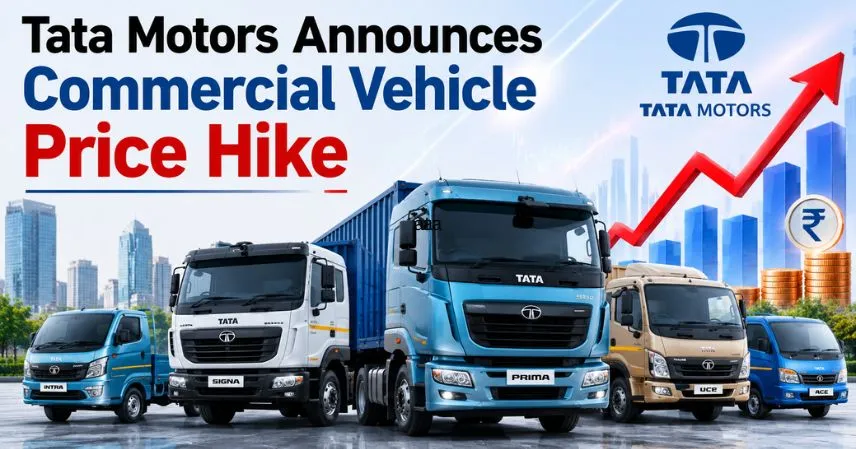
Tata Motors will increase prices across its commercial vehicle range by up to 2.5% starting July 1, 2026, citing rising commodity and input costs. Passenger vehicles, including electric models, will also see a price rise of up to 1.5%.
What’s Changing?
- Commercial Vehicle Price Hike: Up to 2.5% increase across all trucks, buses, pickups, and mobility solutions.
- Passenger Vehicle Price Hike: Up to 1.5% increase on all passenger cars, including ICE and electric vehicles (EVs).
- Deadline for Current Prices: June 30, 2026 is the last day to buy at current rates.
Vehicles Impacted
- Commercial Vehicles:
- Heavy-duty trucks
- Medium and light commercial vehicles
- Pickup trucks
- Buses (school, employee, public transport, tourism)
- Special-purpose vehicles
- Passenger Vehicles:
- Hatchbacks, sedans, SUVs
- Electric vehicles: Nexon EV, Punch Electric, Curvv EV, and more
Why the Price Hike?
Tata Motors attributes the increase to multiple cost pressures:
- Rising raw material costs (steel, aluminum, copper, rubber, plastics, electronics)
- High logistics and supply chain expenses
- Increased production costs (energy, labor, operations)
- Compliance with regulations (emissions, safety, technology investments)
The company states it has absorbed much of these costs but must now pass on some to customers.
What Should Buyers Do Before July 1?
- Book Early: Secure orders to lock in current prices before the hike.
- Finalize Financing: Complete loan approvals ahead of the deadline.
- Review Fleet Plans: Fleet operators should consider accelerating purchases.
- Consult Dealers: Get detailed, model-specific pricing and availability information.
Impact on Fleet Operators and Businesses
- Fleet cost management: Even a small increase can significantly affect total fleet acquisition costs.
- Accelerated purchases: Many may bring forward buying plans to avoid higher prices.
Broader Industry Context
- Automotive industry challenges: Inflation, commodity price swings, higher production costs, and regulatory demands are forcing periodic price reviews.
- Investment in technology: Automakers continue investing in advanced vehicles amid these pressures.
- Market behavior: Fleet operators are likely to keep investing in efficient, modern vehicles despite modest price hikes.
Tata Motors: Expertise, Authority, and Reliability
- Expertise: Decades of experience in India’s commercial vehicle segment.
- Authority: One of the country’s largest automotive companies.
- Reliability: Advance notice and transparent communication about the price change.
Conclusion
Tata Motors will raise prices for its commercial vehicles by up to 2.5% and for passenger vehicles by up to 1.5% from July 1, 2026. The adjustment addresses rising costs and industry challenges. Customers can still benefit from current prices until June 30, 2026.
FAQs
- When will prices go up?
July 1, 2026 - How much is the increase?
Up to 2.5% (commercial vehicles), up to 1.5% (passenger vehicles) - Which vehicles are affected?
All trucks, buses, pickups, mobility solutions, passenger cars, and EVs - Are current prices still available?
Yes, until June 30, 2026 - Should I buy before July 1?
Buyers and fleet operators can save by booking before the new pricing takes effect.