
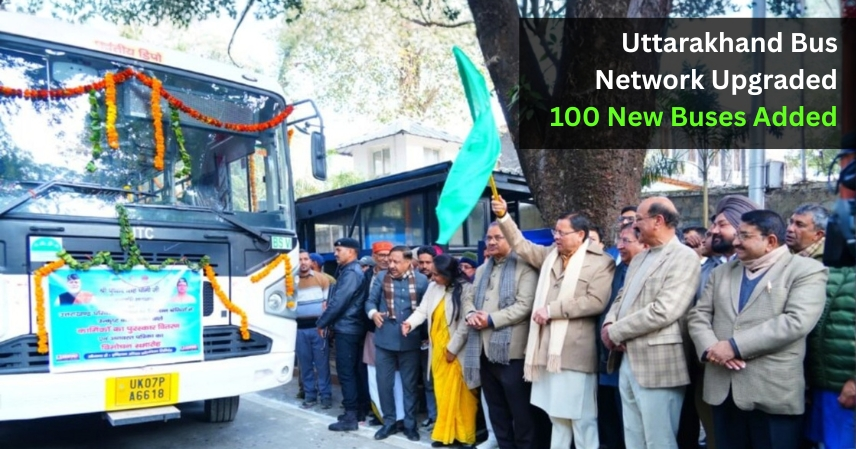
The addition of 100 new buses to the Uttarakhand Transport Corporation (UTC) fleet marks a significant advancement in improving public transportation across the state. Chief Minister Pushkar Singh Dhami officially inaugurated the rollout at the Chief Minister’s camp office, underscoring the state government’s commitment to safer, more connected, and higher-quality travel—an especially important goal in Uttarakhand’s hilly terrain.
Modernizing UTC: More Than Just New Vehicles
This expansion goes beyond simply increasing the number of buses. UTC is embracing modern technology, upgrading infrastructure, enhancing staff welfare, and planning for the introduction of electric buses in the near future. This holistic approach positions UTC as a progressive public transport provider.
Key Highlights at a Glance
- 100 new buses added to UTC’s fleet
- 10 air-conditioned and 2 sleeper buses introduced on a contract basis
- All new buses equipped with GPS, CCTV, and electronic ticketing
- 14 bus stations under construction; 13 already completed
- Electric buses to be launched soon
- More UTC staff to be hired with improved compensation and benefits
Launch Event and Government Commitment
The new fleet was unveiled in a public ceremony attended by senior state officials, including cabinet ministers, parliamentarians, and transport authorities. This event demonstrated the Uttarakhand government’s ongoing dedication to strengthening public services through UTC.
Chief Minister Dhami highlighted UTC’s vital role not just as a transport provider, but as a lifeline for the state’s social and economic wellbeing. Timely bus services are essential for connecting remote communities to education, healthcare, employment, tourism, and markets, making public transit an indispensable part of daily life in Uttarakhand.
Why Public Transport is Critical in Uttarakhand
Uttarakhand faces unique transportation challenges:
- Narrow, steep roads
- Unpredictable weather
- Remote and dispersed communities
For many residents, private vehicles are not a viable option. Public buses are essential for:
- Connecting hill districts to administrative centers
- Supporting tourism and pilgrimage routes
- Ensuring access to hospitals and schools
- Facilitating daily commutes for government and private sector employees
The addition of 100 buses helps bridge service gaps, offering passengers greater comfort and reliability.
Details of the Fleet Expansion
The new buses will serve a wide range of locations, with priority on the busiest and underserved routes. The expansion includes:
- 10 air-conditioned buses
- 2 sleeper buses
These contract-based premium services aim to make long-distance and overnight journeys more comfortable for passengers.
Technological Advancements for Safety and Operations
The latest UTC buses are equipped with advanced safety and operational technologies:
- GPS Tracking: Enables real-time monitoring of bus location, speed, and route, improving punctuality and accountability.
- CCTV Surveillance: Enhances passenger safety, deters incidents, and provides records for resolving disputes or emergencies.
- Electronic Ticketing: Reduces cash handling, ensures transparency, speeds up boarding, and improves revenue tracking.
- Fleet Monitoring Tools: Facilitates proactive maintenance, reducing breakdowns and maximizing uptime.
These upgrades align UTC with best practices from top state transport corporations in India.
Infrastructure Expansion: Bus Stops and Depots
Recognizing that a larger fleet requires robust support infrastructure, the Uttarakhand government has accelerated the construction of transportation facilities:
- 13 bus stations and workshops completed
- 14 more under construction
- 4 interstate bus terminals (ISBTs)
These facilities improve passenger amenities, maintenance efficiency, journey times, and the ability to manage a growing fleet—especially crucial in mountainous areas with limited space.
Future Plans: Transition to Electric Buses
UTC has announced plans to introduce electric buses, though details about timelines and routes have yet to be revealed. The objectives are clear:
- Reduce pollution in cities and tourist destinations
- Lower long-term operating costs
- Support national goals for clean transportation
Electric buses are expected to debut on city routes with established charging infrastructure, such as Dehradun, Haridwar, and Haldwani, positioning Uttarakhand alongside other environmentally conscious states.
Employee Welfare Initiatives
A successful transportation system depends on skilled and motivated staff. The state government is investing in UTC employees through:
- Revised cost of living allowances
- Implementation of Seventh Pay Commission recommendations
- Ongoing recruitment to ensure adequate staffing
These measures aim to maintain safe driving standards, quality maintenance, and consistent service—even during peak periods or adverse weather.
Expert Insights: Why This Matters
From both policy and industry perspectives, this initiative represents a balanced, forward-thinking approach to public transport reform.
Strengths:
- Rapid capacity increase
- Emphasis on technology and safety
- Simultaneous investment in infrastructure
- Future-ready electric vehicle strategy
Challenges:
- Managing costs
- Ensuring efficient maintenance in difficult terrain
- Phasing in electric buses effectively
Overall, these changes enhance UTC’s reliability and set the stage for the future of mobility in Uttarakhand.
Passenger and Local Economic Impact
Commuters and travelers can expect:
- More frequent and diverse routes
- Enhanced safety and comfort
- Convenient ticketing and real-time tracking
Improved transportation links will stimulate the local economy by supporting tourism, creating jobs, and facilitating access to essential services.
Conclusion
The addition of 100 new buses marks a major milestone for the Uttarakhand Transport Corporation and the state’s residents. By expanding the fleet, adopting new technologies, investing in infrastructure, supporting employees, and preparing for an electric future, the government is making public transport more reliable, sustainable, and accessible.
As Uttarakhand balances tourism growth, environmental responsibility, and daily connectivity, UTC’s modernization ensures the state is ready for the evolving demands of transportation.
FAQs
UTC has added 100 new buses to its fleet.
GPS tracking, CCTV cameras, electronic ticketing, and fleet monitoring systems.
Yes, 10 air-conditioned and 2 sleeper buses have been introduced on a contract basis.
Yes, the state government has announced plans to deploy electric buses soon.
13 have been completed and 14 more, including ISBTs, are under construction.