
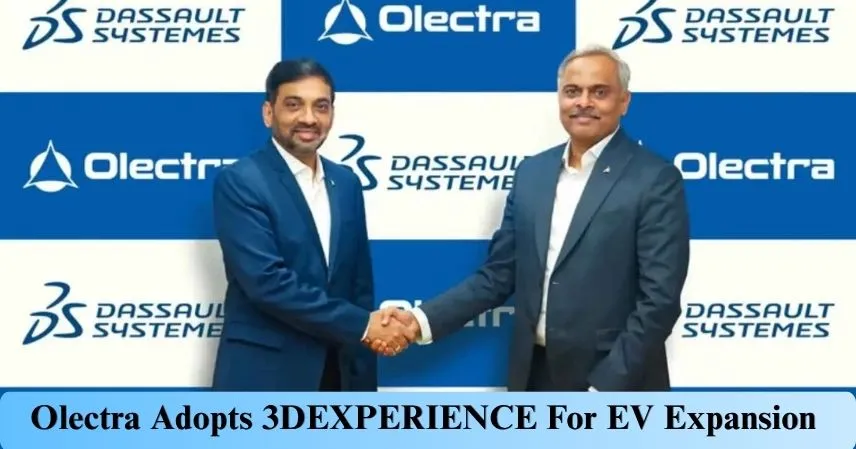
Olectra Greentech has announced a strategic partnership with Dassault Systèmes to advance its digital transformation journey, adopting the 3DEXPERIENCE platform for next-generation electric vehicle (EV) product development. This move is set to increase Olectra’s capabilities in engineering, simulation, manufacturing, and lifecycle management as it expands its electric bus and truck offerings across India.
Key Highlights of the Olectra-Dassault Partnership
- Adoption of Dassault Systèmes’ 3DEXPERIENCE platform
- Focus on electric buses and trucks
- Integrated digital engineering and manufacturing environment
- Support for model-based engineering and virtual simulation
- Reduction in product development costs and timelines
- Over 3,800 electric vehicles already deployed; order book exceeds 10,000 EVs
- Facilitates future-ready EV architecture development
This collaboration marks a significant advancement toward software-driven vehicle engineering within India’s rapidly growing EV industry.
Understanding the Dassault Systèmes 3DEXPERIENCE Platform
The 3DEXPERIENCE platform is an advanced digital engineering ecosystem that unifies every stage of vehicle development in a single collaborative environment.
Main Features
- Product Design Integration: Enables digital design and management of complete vehicles.
- Virtual Simulations: Allows for performance testing before physical construction.
- Manufacturing Support: Integrates engineering and manufacturing processes.
- Lifecycle Management: Manages the entire product lifecycle, from development to deployment.
- Cooperative Engineering: Facilitates real-time collaboration across departments.
With this platform, Olectra can accelerate EV development cycles and improve engineering precision.
Why Olectra Greentech Chose 3DEXPERIENCE
India’s commercial EV sector is fiercely competitive, with companies striving for faster product development and greater engineering efficiencies. Olectra’s digital transformation plan is designed to overcome industry challenges.
Reasons for Adoption
- Rapid Product Development: Enables virtual product validation before manufacturing.
- Reduced Development Costs: Simulation reduces the need for physical prototypes.
- Enhanced Precision: Integrated systems improve accuracy and minimize errors.
- Improved Collaboration: Streamlines coordination between engineering and production.
- Global Best Practices: Aligns Olectra with leading global OEM standards.
This adoption is a strategic move to leverage digital technology for global competitiveness.
Olectra’s Electric Bus & Truck Expansion
Olectra Greentech is aggressively scaling up its electric mobility business.
Current Market Status
- EV Deployment: Over 3,800 electric vehicles operating across India.
- Strong Order Book: Orders for more than 10,000 electric vehicles.
- Focus Areas: Electric buses, trucks, and commercial EV mobility solutions.
The Dassault platform comes at a critical time as Olectra ramps up production and explores new EV architectures.
The Shift to Model-Based Engineering
Model-based engineering is central to this cooperation, emphasizing digital models and simulations throughout the product development lifecycle.
Benefits for EV Manufacturers
- Faster Innovation: New vehicle concepts tested digitally.
- Improved Battery Integration: Efficient and space-saving battery designs.
- Enhanced Safety Validation: Virtual crash simulations and performance testing.
- Fewer Errors: Early detection of engineering issues.
- Reduced Production Risks: Identify manufacturing challenges before production begins.
Model-based engineering is a game-changer for commercial EVs, optimizing performance, range, and efficiency.
Virtual Validation: Accelerating Development Cycles
Olectra’s deployment of the 3DEXPERIENCE platform is heavily focused on virtual validation technology.
What is Virtual Validation?
Virtual validation allows engineers to digitally test:
- Vehicle aerodynamics
- Structural durability
- Battery integration
- Temperature management
- Chassis performance
- Manufacturing compatibility
This significantly reduces development time and increases operational efficiency.
Significance for the EV Industry
The rapid pace of the EV market demands swift product launches and high reliability. Virtual validation enables companies like Olectra to:
- Accelerate time-to-market
- Enhance engineering reliability
- Lower R&D expenses
- Improve overall product quality
Olectra is cementing its leadership in India’s EV industry, aligning with the country’s push for electrification and modern public transport.
Industry Drivers of EV Growth in India
- Government Policies: National and state EV incentives boost adoption.
- Environmental Goals: Cities seek cleaner mobility solutions.
- Fleet Electrification: Public transport operators switch to electric.
- Logistics: Electric trucks are increasingly vital for urban freight.
The Olectra-Dassault partnership positions both companies to capitalize on these trends.
Leadership Perspectives
Olectra Greentech
“The collaboration with Dassault Systèmes will help the company build future-ready EV products and enhance speed, accuracy, and engineering efficiency.”
— Mahesh Babu, Managing Director, Olectra Greentech
Dassault Systèmes
“Automotive companies across the world are moving towards integrated and simulation-driven engineering ecosystems. Virtual engineering technologies are critical for next-generation vehicle development.”
— Deepak NG, Managing Director, India, Dassault Systèmes
Key Industry Trends
- Versatile EV Platforms: Flexible designs for multiple applications.
- Simulation-Based Design: Reducing physical prototypes through digital testing.
- Smart Manufacturing: Digitally connected factories.
- Rapid Innovation: Shorter development cycles boost competitiveness.
- Data-Driven Development: Performance data shapes future products.
Olectra’s digital strategy is in alignment with these global trends.
Customer Benefits
Advanced engineering platforms ultimately deliver value to customers and fleet operators:
- Greater Product Reliability: Enhanced engineering increases durability.
- Faster Technology Upgrades: Improved speed to market.
- Optimized Vehicle Performance: Simulation-driven efficiency.
- Reduced Maintenance: Lower failure rates.
- Higher Fleet Uptime: Enhanced operational performance for commercial fleets.
Impact on India’s Commercial EV Sector
The Olectra-Dassault partnership may set a precedent for the industry:
- Increased Technology Adoption: Other companies may follow suit.
- Accelerated Innovation: Competition drives technical enhancements.
- Higher Manufacturing Standards: Digital engineering boosts quality.
- Stronger Global Competitiveness: Positions Indian EV makers for international success.
Future Outlook for Olectra Greentech
Olectra will continue its investments in e-mobility, focusing on:
- Next-generation electric buses
- Advanced electric truck platforms
- Smart, connected vehicle systems
- Digital manufacturing tools
- Innovative EV architectures
With India’s EV market expanding, Olectra is well-placed for sustained growth.
Conclusion
The Olectra-Dassault partnership is a milestone for India’s electric commercial vehicle sector. By leveraging the 3DEXPERIENCE platform, Olectra is enhancing engineering accuracy, accelerating development, and driving innovation in electric buses and trucks. This collaboration reflects the broader industry trend toward digital engineering, virtual simulation, and model-based development, positioning Olectra for leadership in India’s e-mobility future.
FAQs
Q1.What platform does Olectra use?
Ans.Olectra Greentech uses Dassault Systèmes’ 3DEXPERIENCE platform.
Q2.Why is the platform needed?
Ans.It enables better product development, virtual validation, engineering accuracy, and synchronized manufacturing.
Q3.How many EVs has Olectra deployed?
Ans.Olectra has over 3,800 electric vehicles currently operating in India.
Q4.What is Olectra’s order book position?
Ans.Olectra holds orders for more than 10,000 electric vehicles.
Q5.Which vehicle segments are targeted?
Ans.The platform supports the development of both electric buses and electric trucks.
Q6.What is model-based engineering?
Ans.Model-based engineering leverages digital simulations and virtual models to accelerate and improve the accuracy of vehicle development.